
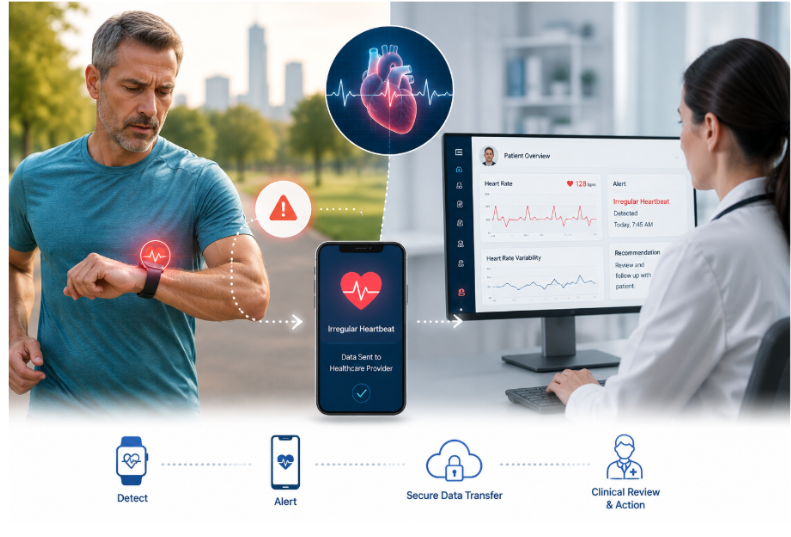
Imagine a patient experiencing an irregular heartbeat during their morning walk.
Instead of waiting days for an appointment, their smartwatch detects the anomaly, alerts them instantly, and shares the data with their healthcare provider. Within hours, clinicians review the information and recommend the next steps.
This isn’t a glimpse into the distant future—it’s healthcare in 2026.
The industry is rapidly evolving, driven by technologies that are making care more connected, proactive, and patient-centered. From artificial intelligence to smart hospitals, innovation is helping healthcare providers improve outcomes while delivering more efficient care.
AI Powered Diagnostics
Artificial Intelligence is transforming how clinicians detect and diagnose diseases. By analyzing medical images, lab reports, and patient records in seconds, AI can identify patterns that might otherwise be missed.
For example, AI-assisted radiology tools are helping healthcare professionals detect abnormalities earlier, enabling faster diagnoses and more informed clinical decisions. Rather than replacing clinicians, AI acts as a powerful support system that enhances accuracy and efficiency.
Remote Patient Monitoring
Healthcare is no longer limited to hospitals and clinics.
Remote Patient Monitoring (RPM) allows providers to track patients through connected devices and wearables, collecting real-time health data from anywhere.
A heart failure patient, for instance, can have their blood pressure, heart rate, and activity levels monitored from home. If warning signs emerge, care teams can intervene before the condition worsens, reducing hospital readmissions and improving patient outcomes.
Wearable Health Technology
Wearables have evolved far beyond fitness tracking.
Today’s devices can monitor heart rhythms, blood oxygen levels, sleep patterns, and stress indicators, providing users and healthcare providers with continuous health insights.
In several cases, wearable devices have helped identify irregular heart rhythms before symptoms appeared, allowing patients to seek medical attention sooner. This shift toward continuous monitoring is empowering people to take a more active role in managing their health.
Smart Hospitals
Hospitals are becoming increasingly intelligent through the integration of AI, automation, robotics, and real-time analytics.
Smart hospitals use connected systems to optimize patient flow, manage resources efficiently, and streamline administrative processes. Some healthcare facilities now operate centralized command centers that provide real-time visibility into bed availability, staffing levels, and patient movement.
The result is improved operational efficiency and a better patient experience.
Predictive Analytics
Perhaps the most significant transformation is the move from reactive to proactive care.
Predictive analytics uses historical and real-time data to identify patients who may be at risk of developing complications before symptoms appear. Healthcare organizations are already using these insights to predict hospital readmissions, chronic disease progression, and other high-risk events.
By identifying risks earlier, providers can deliver preventive interventions that improve outcomes and reduce costs.
Looking Ahead
Healthcare innovation in 2026 is not just about adopting new technologies—it’s about creating a smarter, more connected healthcare ecosystem.
Together, AI, remote monitoring, wearables, smart hospitals, and predictive analytics are helping providers shift from treating illness to preventing it. Organizations that embrace these innovations today will be better positioned to deliver the personalized, proactive care patients expect tomorrow.
#HealthcareInnovation #Healthcare2026 #FutureOfHealthcare #DigitalHealth #HealthTech #MedTech #PatientCare #InnovationInHealthcare #ArtificialIntelligence #AIInHealthcare #MedicalInnovation #DigitalTransformation #HealthcareTechnology #PrecisionMedicine #Telemedicine #RemotePatientMonitoring #WearableTechnology #GenerativeAI #MedicalEducation #ClinicalInnovation #HealthcareLeadership #SmartHealthcare #FutureMedicine #HealthcareStartups #HealthInnovation #MedicalResearch #PatientCentricCare #InnovationEcosystem #MICELabs #HealthcareTrends