
Designing for Doctor’s Orders: Creating Customizable Medication Dispensers
It’s 9 a.m. at a bustling government hospital in Mumbai, and Dr. Mehta, a seasoned physician, finds himself facing a familiar dilemma. A patient with diabetes has once again missed their medication dose, a small oversight that could snowball into a serious complication. Dr. Mehta knows this isn’t just a personal struggle for the patient; it’s a reflection of a systemic issue in medication management. The real question is, can technology bridge this gap without complicating the lives of patients and healthcare providers?
Medication non-adherence is a silent epidemic, quietly inflating healthcare costs and deteriorating patient outcomes. Estimates suggest that non-adherence alone contributes to nearly 10% of all hospital admissions. In India, where resource limitations are commonplace and patient loads are high, the stakes are even higher. A potential solution emerges in the form of customizable medication dispensers, designed to integrate seamlessly into the daily rhythms of patients’ lives. But the challenge lies in creating a system that is both sophisticated and simple enough to be embraced by a wide range of users.
The Unseen Cost of Non-Adherence
Let’s take a closer look at the costs of non-adherence. Patients who fail to follow their prescribed medication regimens often experience worsening health conditions, leading to increased doctor visits, hospitalizations, and even premature death. Financially, this translates to a significant burden on the healthcare system, with billions spent annually on avoidable complications. The irony is that these costs dwarf the investment required to develop and implement effective medication management systems.
Medication non-adherence is responsible for 125,000 deaths annually in the United States alone, according to some studies.
Designing the Ideal Dispenser: More Than Just Technology
To address these challenges, we need to design medication dispensers that are not only technologically advanced but also user-friendly and adaptable to individual needs. The goal is to create devices that integrate into existing healthcare frameworks, like the CDSCO regulatory system in India, without overwhelming patients or their caregivers.
- Understand the User: The first step is a thorough understanding of the end-users. Are they elderly patients with limited tech-savvy? Or young professionals with packed schedules? The design must cater to their specific needs and capabilities.
- Focus on Simplicity: While it’s tempting to pack dispensers with features, simplicity should be the priority. A straightforward interface that assists with reminders, dosage tracking, and adherence monitoring can make a significant difference.
- Integration with Healthcare Systems: Seamless integration with electronic health records (EHR) and healthcare providers’ systems is crucial. This ensures that doctors, like Dr. Mehta, can monitor adherence and intervene when necessary.
- Affordability and Accessibility: In India, affordability is a critical concern. Local manufacturing and cost-effective materials can help reduce costs, making these dispensers accessible to a broader population.
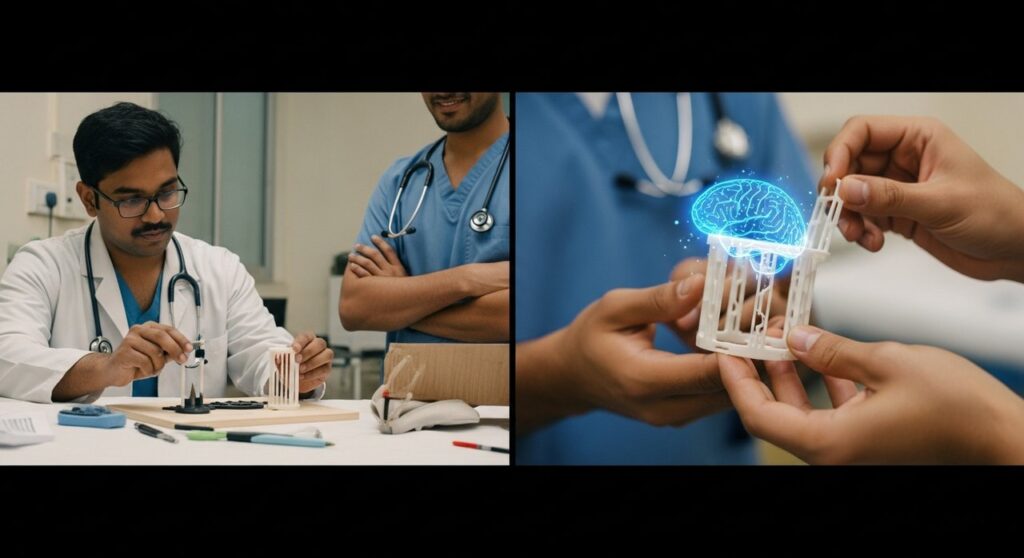
Creating a medication dispenser that ticks all these boxes isn’t just a technical challenge; it’s an invitation to rethink how we approach patient care. The path from concept to prototype doesn’t have to be daunting. Using 3D printing and local resources, innovators can rapidly iterate their designs, testing them in real-world settings to ensure they meet the needs of both patients and healthcare providers.
Confronting the Challenges
Despite their potential, medication dispensers face several barriers to widespread adoption. High initial costs, concerns about reliability, and the need for regular maintenance can deter potential users. Moreover, the technology must be robust enough to handle India’s diverse climates and power inconsistencies, especially in rural areas.
Addressing these concerns requires a collaborative effort. Engaging with stakeholders, patients, doctors, and regulatory bodies, early in the design process can provide invaluable insights. This collaborative approach not only helps in creating a better product but also fosters trust among users, which is essential for successful implementation.
For those ready to take on this challenge, organizations like MICE Labs provide the perfect platform. By connecting clinicians with the tools and knowledge they need, MICE Labs empowers them to transform bedside frustrations into practical solutions. Programs like PULSE and MEDIC offer hands-on experience in medical device design and prototyping, bridging the gap between clinical expertise and technological innovation.
Looking Ahead: The Future of Medication Management
The journey to develop customizable medication dispensers is fraught with challenges, but the potential rewards are immense. By improving medication adherence, we can enhance patient outcomes, reduce healthcare costs, and ultimately, save lives. The question remains: are we ready to embrace this opportunity and reshape the future of healthcare?
As we forge ahead, it’s imperative to remember that innovation doesn’t require permission or perfect conditions, it requires a willingness to confront uncomfortable truths and a commitment to finding solutions. The future of healthcare technology lies in the hands of those who dare to build it.