
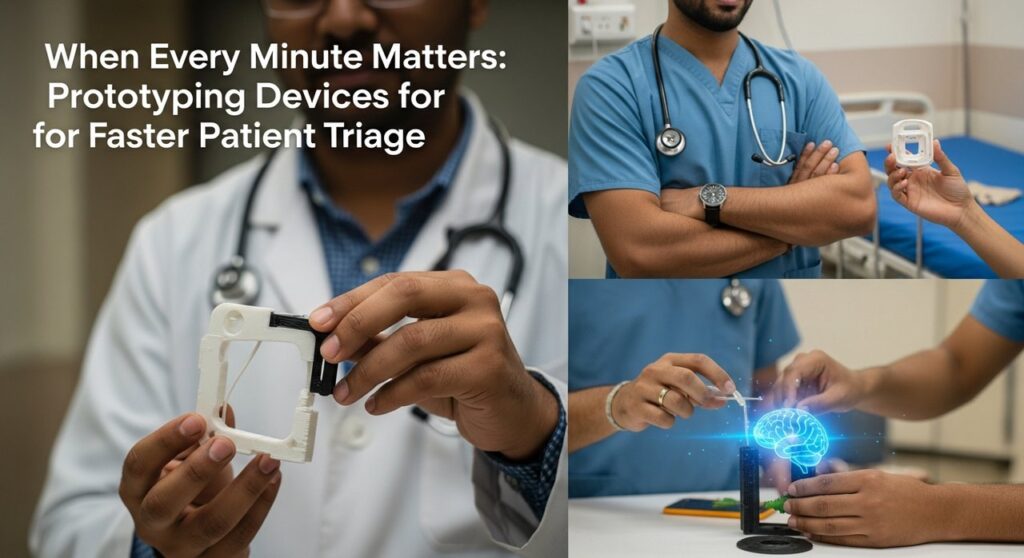
When Every Minute Matters: Prototyping Devices for Faster Patient Triage
The cacophony of alarms in a high-stakes emergency room isn’t just background noise, it’s a life-saving symphony that demands immediate attention. Yet, in the chaos, critical alarms are often missed, leading to preventable adverse events. Imagine a nurse, overwhelmed by the multitude of sounds, inadvertently ignoring the alert that signals a patient’s deteriorating condition. This isn’t a rare occurrence; it’s a systemic issue rooted in the design of our healthcare systems.
The Unseen Cost of Alarm Fatigue
Alarm fatigue is a well-documented problem in hospitals worldwide. Research indicates that nurses can experience anywhere from 96 to 350 alarms per bed per day, with up to 99.4% being false or non-actionable. This overwhelming volume leads to critical alerts being overlooked, contributing significantly to the 27-33% of hospital admissions that result in adverse events. The financial implications are staggering, with costs per adverse event ranging from $334 to $75,000. But the real cost is measured in lives and the quality of care.
A Military-Inspired Solution: Metacognitive Attention Aids
In a study conducted in a simulated acute care unit, researchers explored the use of a wearable attention aid inspired by metacognition techniques from military systems. The device was designed to help clinicians triage alarm events more effectively, decreasing response times to critical alarms by a median of 148%. For some nurses, response times improved by as much as 3,303%, reducing a 17.76-minute response to just 1.33 minutes.
“Alarm safety remains the number one patient safety problem, with most alarms going unheeded due to sheer volume.”
This wearable device demonstrated that when clinicians can access and process alarm information efficiently, patient safety can improve dramatically. The integration of such technology is not just a possibility, it’s a necessity in modern healthcare.
Why Our Current Systems Fail
The failure of current alarm systems is not due to negligence but to design flaws. Most systems inundate clinicians with data without prioritizing actionable insights. Nurses, already stretched thin with multitasking and frequent interruptions, cannot devote the necessary attention to every alarm. The result? Alarm fatigue, where crucial alerts blend into the noise.
The Institute of Medicine’s report, “To Err is Human,” emphasizes that the problem lies not with individual practitioners but with the design of healthcare systems. The focus needs to shift from assigning blame to designing systems that inherently prioritize safety.
The Path Forward: Prototyping Smarter Devices
So, how do we address this issue within the resource constraints typical of Indian hospitals? The solution lies in practical, cost-effective prototyping. Here’s how:
- Identify the Core Problem: Recognize that the issue is not the alarms themselves but the inability to process and prioritize the information they provide. In Indian hospitals, where resources are limited, this step is crucial.
- Leverage Local Expertise: Collaborate with clinicians who experience these challenges daily. Engage teams like MICE Labs, who specialize in turning real bedside problems into practical solutions. This approach ensures the device meets actual needs.
- Prototype with Precision: Use tools like 3D printing to create prototypes quickly and affordably. This method allows for rapid iteration and testing, crucial for developing effective devices that can be deployed in high-pressure environments.
- Test in Real Environments: Implement the prototypes in a clinical setting to gather feedback and make necessary adjustments. The goal is to ensure the device integrates seamlessly into the existing workflow without adding complexity.
- Scale Responsibly: Once tested and refined, scale the solution across other facilities. Ensure that the implementation considers local regulatory requirements and cost constraints, particularly in government hospitals.
Each step is vital, but the most critical is leveraging local expertise. Without the insights from those who are in the trenches, the prototypes risk being irrelevant to actual clinical needs.
Breaking the Myth: Innovation Without an Engineering Degree
One pervasive myth is that innovation in medical devices requires an engineering degree or significant funding. This is a barrier that needs dismantling. The reality is that with the right guidance and resources, even those without technical backgrounds can create impactful solutions.
Consider the work done by surgeon-innovators in Mumbai, who have crafted patient-friendly devices through hands-on programs like those run by MICE Labs. These initiatives demonstrate that with a focus on practical application and a willingness to learn, creating effective medical devices is within reach for clinicians.
The Challenge: Can We Innovate Faster?
The question we must ask isn’t whether we can innovate but how we can do so more swiftly and effectively. The stakes are high, and the need is urgent. The solution lies in empowering clinicians with the tools and knowledge to tackle these challenges head-on.
For those ready to take on this challenge, the path is clear: start small, iterate quickly, and prioritize real-world applicability. The goal is to create devices that integrate seamlessly into existing workflows, reducing the cognitive load on clinicians and improving patient outcomes.
In the end, the true measure of success will not be the devices themselves but the lives saved and the quality of care enhanced. It’s time to move from theory to practice and address the unspoken frustration of those on the front lines of healthcare.
“When every minute matters, the difference between life and death can be a device that empowers rather than overwhelms.”
The future of patient triage isn’t just about faster responses, it’s about smarter, more informed care. And that future is within reach for those willing to innovate from the heart of the ward.