
Building Bridges: How to Collaborate with Patients for Device Usability Feedback
In the dim light of a bustling Mumbai hospital ward, a young doctor fumbles with a new medical device. The procedure is routine, but the device’s interface is anything but intuitive. This scene unfolds daily in countless hospitals, highlighting a critical gap in medical device development: usability. While developers often focus on technical specifications and regulatory compliance, they overlook a vital component, the end user’s experience. Enter the patients themselves, who hold the key to unlocking a device’s true potential through insightful usability feedback.
The Cost of Ignoring Patient Feedback
Imagine a scenario where a seemingly minor design flaw results in a catastrophic error. Unfortunately, this is not a hypothetical situation. In 2019, a widely used infusion pump was recalled due to a software glitch that led to incorrect dosages. The root cause? Insufficient user-centered design and inadequate feedback from actual users. The incident led to millions in recall costs and, more importantly, put countless lives at risk.
The failure to integrate patient feedback in device design can lead to life-threatening errors and significant financial losses.
Now, consider the contrast: a device developed with direct input from patients and healthcare providers. Such collaborative efforts can prevent errors and improve patient outcomes significantly. By actively involving patients in the design process, developers can identify potential pitfalls early, ensuring that the final product is both functional and intuitive.
The Power of Patient Experience Design (PXD)
Traditional usability methods often fall short in capturing the nuanced needs of patients. This is where Patient Experience Design (PXD) comes into play. PXD emphasizes contextual inquiry and participatory methodologies, focusing on the real-world application of devices in healthcare settings. By integrating PXD, developers can address concerns that standard usability tests might miss, such as the unique challenges faced by individuals with disabilities or chronic conditions.
In a recent study, researchers found that combining traditional usability methods with PXD led to a 30% reduction in user errors and a 25% increase in overall patient satisfaction. These numbers underscore the importance of involving patients not as passive subjects but as active participants in the design process.
Steps to Integrate Patient Feedback in Device Development
- Recruit Diverse Patient Participants: Involve a wide range of users, considering factors like age, gender, and medical history. This diversity ensures that the device meets the needs of all potential users.
- Conduct Contextual Inquiries: Observe patients using the device in real-world settings. This provides insights into how the device is used in practice, revealing potential usability issues.
- Implement Iterative Testing: Use feedback from initial testing to make design improvements. This cycle of testing and refinement continues until the device meets usability standards.
- Embrace Multidisciplinary Collaboration: Involve engineers, clinicians, and patients in the design process. This collaboration ensures that the device is both technically sound and user-friendly.
- Utilize Patient Experience Design (PXD): Integrate PXD principles to address the specific needs and experiences of patients, ensuring that the device is not only usable but also enhances the patient experience.
Overcoming Barriers: The Role of Technology and Innovation
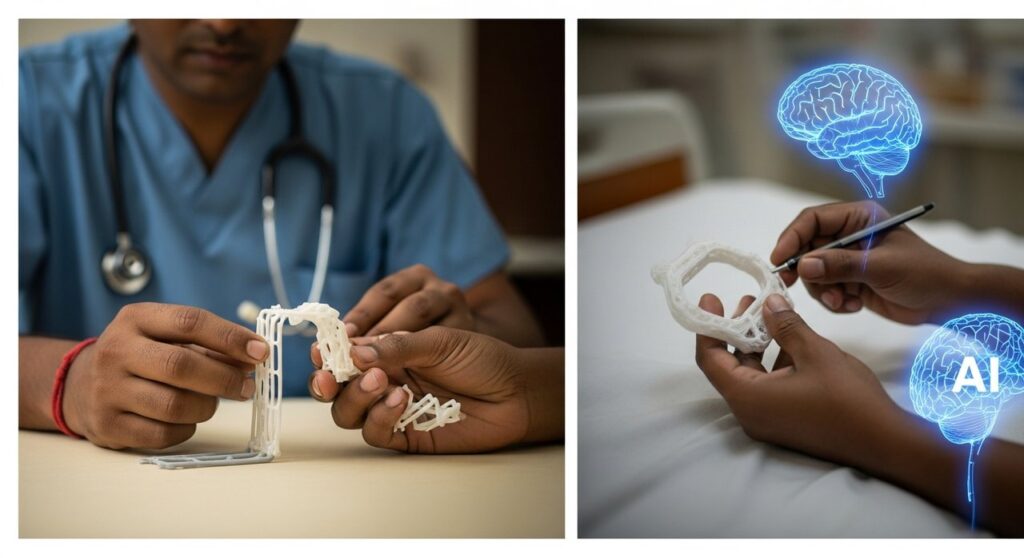
In a resource-constrained environment like India, the challenge is not just about creating user-friendly devices but doing so affordably. However, the advent of technologies like 3D printing and AI presents new opportunities for innovation. These technologies can streamline the prototyping process, allowing for rapid iterations based on patient feedback.
For instance, in a recent project at MICE Labs, a team of innovators leveraged 3D printing to develop a patient-feedback-informed device prototype in just two weeks. The use of AI further enhanced the design by analyzing patient feedback data to identify key usability trends. Such innovations demonstrate that it is possible to create cost-effective, patient-centered solutions even in challenging settings.
The Path Forward: Making Usability Central to Device Development
To truly revolutionize medical device development, we must shift from a developer-centric to a user-centric approach. This shift requires a cultural change within organizations, recognizing that patients are not just end-users but essential collaborators in the design process.
How do we start? By building a simple patient feedback loop, as demonstrated in our article “How a Simple Patient Feedback Loop Sparked a Revolutionary Device Design”. This approach, which prioritizes real-time feedback from patients, can lead to revolutionary design improvements and ultimately enhance device usability.
In conclusion, the journey from problem to prototype is fraught with challenges, but by integrating patient feedback, we can overcome these obstacles. Through collaboration, innovation, and a steadfast commitment to usability, we can create medical devices that not only meet regulatory standards but also improve patient care and safety. The hard thing is doable, and it starts with listening to the very people who will use the devices we create.