
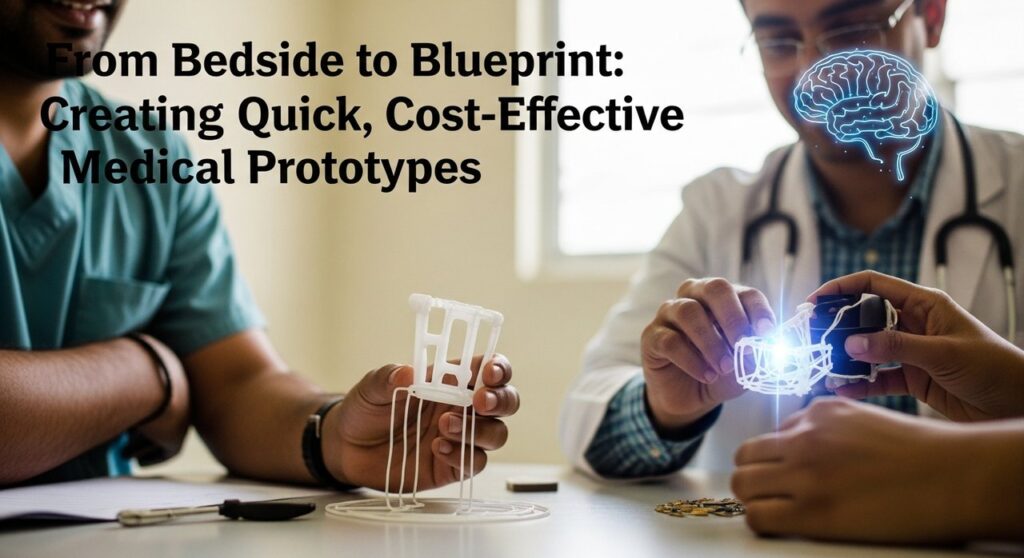
From Bedside to Blueprint: Creating Quick, Cost-Effective Medical Prototypes
In the bustling corridors of a government hospital in Mumbai, Dr. Priya faced a recurring challenge. Every morning, she would struggle with the cumbersome diagnostic tools that seemed more suited for a space station than a crowded ward. The problem was real, and the solution seemed elusive. But what if there was a way to transform these everyday frustrations into functional, affordable prototypes that could make a tangible difference?
This isn’t just a story about innovation; it’s about breaking a myth. You don’t need an engineering degree or a hefty grant to innovate in healthcare. What’s required is a practical, hands-on approach that takes your clinical insight from a sketch on a napkin to a life-saving device. Here’s how you can make that leap.
Step 1: Identifying the Problem, Not Just an Idea
Before you can build, you need to know what you’re building for. The real secret to successful medical prototyping isn’t in the tools you use but in the problem you’re solving. Dr. Priya’s issue wasn’t just about the diagnostic tool; it was about patient delays and the increased risk of infection. Dive deep into your clinical experience and pinpoint the root cause of the frustration.
Rule of thumb: The clearer your understanding of the problem, the more targeted your prototype can be.
Step 2: Conceptualize with Constraints in Mind
Now that you have a clear problem, it’s time to conceptualize your solution. But here’s the twist, do it with constraints in mind. Whether it’s budget limitations, regulatory hurdles, or material availability, embracing these constraints early can drive more innovative solutions. Remember, necessity isn’t just the mother of invention; constraint is its father.
Consider the case of a low-cost surgical splint developed by a Mumbai resident. By using locally available materials and rethinking traditional designs, they were able to create a functional prototype at a fraction of the cost. You can read more about their journey here.
Step 3: Employ Rapid Prototyping Techniques
Here’s where the magic of modern technology comes into play. Rapid prototyping techniques, like 3D printing, can turn your concept into a tangible model in hours. The key is to focus on functionality over aesthetics. Early prototypes are about testing assumptions, not impressing investors.
- Start with a basic design using CAD software.
- Use 3D printing to create a physical model. Opt for materials that are easy to modify.
- Test in a simulated environment to identify flaws and areas for improvement.
Step 4: Iterative Testing and Refinement
The first prototype is rarely the final product. Iterative testing is your best friend. Each test provides insights that inform the next iteration. The goal is to create a cycle of continuous improvement until the prototype meets all functional requirements.
Incorporating feedback from potential users, doctors, nurses, and even patients, can provide invaluable perspectives that you might have overlooked. This step is critical and often distinguishes a good prototype from a great one.
Step 5: Navigating the Regulatory Maze
In India, the regulatory landscape can be daunting, but it’s a necessary hurdle for ensuring safety and efficacy. Familiarize yourself with the CDSCO guidelines early in the process. This not only saves time but can also inform your design choices.
Hard truth: A prototype that can’t pass regulatory approval is just a model.
Step 6: Cost-Effective Scaling
Once your prototype is validated, it’s time to think about scaling. This involves selecting manufacturing processes that balance cost with quality. In India, this could mean leveraging local manufacturing capabilities or exploring partnerships with medical institutions.
For instance, consider using printed electronics manufacturing for flexible medical devices, which can be a cost-effective solution for wearable technology. This approach not only reduces material costs but also simplifies the assembly process.
The Element of Surprise: You Already Have What it Takes
Here’s the non-obvious insight: as a clinician, you already possess the most crucial ingredients for successful prototyping, a deep understanding of clinical needs and a firsthand view of the problems that require solutions. The technical skills can be learned, the tools can be acquired, but this insight is irreplaceable.
Your journey from bedside to blueprint is about leveraging this insight and applying a structured, scrappy approach to innovation. Don’t let the lack of an engineering background or the absence of a grant deter you. Instead, tap into the wealth of clinical experience and the rich, albeit challenging, context of Indian healthcare to drive meaningful innovation.
The next time you find yourself frustrated by a piece of medical equipment or an inefficient workflow, remember: that’s your starting point. Your prototype awaits.