
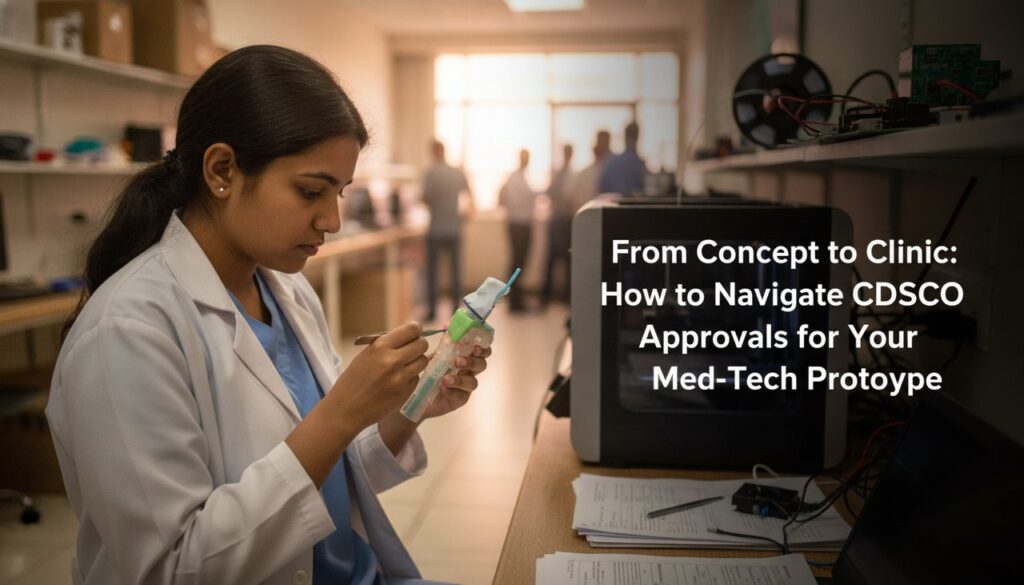
From Concept to Clinic: How to Navigate CDSCO Approvals for Your Med-Tech Prototype
Your med-tech prototype sits on the shelf, ready to make a difference in the lives of patients. But before it can do that, it needs to clear the daunting regulatory hurdle known as the Central Drugs Standard Control Organization (CDSCO) approval. You might feel like you’re standing at the foot of a mountain, unsure of the path to take. But what if I told you there’s a way to turn this overwhelming process into a manageable journey? Let’s break it down into actionable steps and uncover the insights you need to bring your innovation to the clinic.
The First Step: Understanding CDSCO’s Role
The CDSCO is India’s national regulatory authority, responsible for ensuring that medical devices and drugs are safe and effective for public use. It operates under the Ministry of Health and Family Welfare and is pivotal in approving medical devices for the Indian market. If your product is a medical device, you’ll need to engage with CDSCO at various stages, from clinical evaluations to market authorization.
Engagement with CDSCO is not just a regulatory requirement; it’s a partnership to ensure patient safety and product efficacy.
Step 1: Categorize Your Device Correctly
The first critical step is classifying your device. Is it a low-risk device like a thermometer, or a high-risk one like a pacemaker? This classification determines the regulatory path you’ll need to follow. India’s medical device rules categorize devices into Class A, B, C, and D, with Class A being the least risky. Misclassification can lead to delays and increased costs, so getting this right is crucial.
Step 2: Register on the SUGAM Portal
Before you can submit any applications, you must register on the SUGAM portal, CDSCO’s online submission platform. This portal is your gateway to submitting documents, tracking applications, and communicating with the regulatory body. A complete and accurate registration on this platform is essential to avoid bottlenecks later. Make sure all details are accurate and keep your login credentials secure.
Step 3: Prepare Your Dossier
Your dossier is the heart of your application. It should include comprehensive data on your device, including design specifications, testing results, and clinical trial data if applicable. Precision is key here. Ensure that your dossier answers all potential queries about the safety and efficacy of your device. This is where most applications fail, so dedicating time to get this right can save you months of back-and-forth.
Step 4: Pay the Appropriate Fees
Each application requires a fee, which varies depending on the device class and the application type. Ensure that you calculate and pay the correct fee to prevent any application holds. Keep a record of all transactions for future reference. Financial oversight here can prevent unnecessary complications later in the process.
Step 5: Await Review and Be Prepared for Site Inspections
Once your application is submitted, it enters the review phase. This includes a detailed examination of your dossier and might involve site inspections. Be prepared for inspectors to visit your facility to verify compliance with Good Manufacturing Practices (GMP). Inspections are thorough, so ensure your facility consistently maintains the standards outlined in your application.
Step 6: Respond Promptly to Queries
During the review process, CDSCO may raise queries regarding your application. The speed and accuracy of your responses can significantly affect your approval timeline. Delayed or inadequate responses can lead to rejection. Establish a dedicated team to handle these queries promptly and accurately.
Why Most Applications Fail and How to Avoid It
Many applications stumble due to incomplete submissions or mismatched product specifications. Here’s where having a seasoned regulatory consultant can turn the tide. Understanding the nuances of regulatory language and requirements is often the difference between approval and rejection.
Incomplete applications are the most common cause of delays. Meticulous preparation and attention to detail are your best allies.
Leveraging Real-World Evidence (RWE)
Real-world evidence is becoming increasingly vital in regulatory submissions. RWE can provide a more comprehensive view of a device’s performance in actual clinical settings, complementing traditional clinical data. Discussing RWE with CDSCO early in the process can streamline your application, especially for novel devices with limited clinical data.
Engaging with Stakeholders
Early and frequent engagement with stakeholders, including clinicians, payors, and regulatory bodies, can help align your product development with market needs and regulatory expectations. This collaborative approach can facilitate smoother navigation through the regulatory landscape.
The Power of Proactive Planning
Proactive planning is the most potent tool in your arsenal. Start by developing a comprehensive regulatory strategy that outlines all necessary steps and timelines. This plan should account for potential hurdles and include risk mitigation strategies. Regularly update your plan based on feedback and changing regulations.
Local Manufacturing Considerations
For Indian innovators, local manufacturing can significantly impact regulatory success. Understanding and integrating local manufacturing capabilities from the start can reduce costs and streamline compliance with CDSCO requirements. Consider leveraging existing resources within government hospitals for cost-effective prototyping, as detailed in our article on cost-effective prototyping.
The Role of Post-Market Surveillance
Post-market surveillance is not just a regulatory requirement but a critical component in the lifecycle of a medical device. It can provide invaluable data on device safety and performance, informing future iterations and enhancements. Implementing a robust post-market surveillance plan can also aid in meeting CDSCO’s ongoing compliance expectations.
Conclusion: From Prototype to Product
Navigating the CDSCO approval process is undoubtedly challenging, but with a strategic approach, it’s entirely achievable. By understanding the regulatory landscape, carefully preparing your submission, and engaging with the right stakeholders, you can transform your prototype into a life-changing product. Remember, every successful approval begins with a well-laid plan, attention to detail, and a commitment to compliance.
Your med-tech journey doesn’t end with CDSCO approval. It’s merely the beginning of making an impact in the clinic. Stay committed, stay informed, and your innovation could be the next breakthrough in Indian healthcare.