
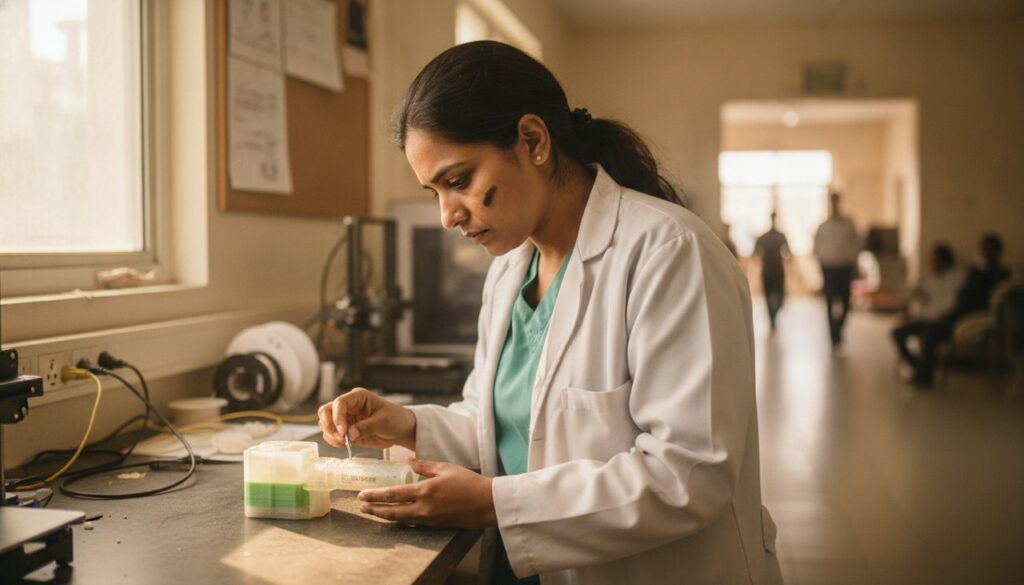
Making It Work: Innovating Affordable Sterility Solutions Beyond the Clean Room
In a bustling government hospital ward, a nurse stands by a patient’s bed, holding a hastily sterilized piece of equipment in her hand. She knows it’s not ideal, but it’s the best they have. The clean room is far away, and the clock is ticking. This is the reality for many healthcare professionals in resource-constrained environments. Yet, the need for sterile conditions is non-negotiable. How do we bridge this gap? By dismantling the belief that sterility equals expense and complexity, we can unlock practical, affordable sterility solutions within reach of every clinician, right where they are.
Understanding the Core of Sterility
Sterility in medical settings isn’t just about pristine environments, it’s about controlled processes that consistently eliminate or prevent contamination. The cleanroom, with its HEPA filters and stringent protocols, is the gold standard. However, assuming this is the only path to sterility is a costly misconception. In many Indian hospitals, such resources are simply not feasible. So, what truly makes a sterile environment? It’s not the room but the principles: control of air, surfaces, and people.
“Sterility is not about the space; it’s about the principles. Control air, surfaces, and people.”
Principle One: Air Control
Airborne contamination is a silent intruder in hospital wards. While cleanrooms use advanced HVAC systems to maintain airflow and filter out contaminants, you can achieve a basic level of air control with strategic ventilation and air purifiers. Inexpensive air purifying units, placed strategically, can significantly reduce airborne particles. Look for units designed for small spaces, these can be affixed near high-risk areas like dressing stations or procedure tables.
Another overlooked tactic is the use of negative pressure zones. By creating a simple barrier using plastic sheeting and redirecting airflow with fans, you can isolate areas and control the spread of airborne pathogens.
Principle Two: Surface Sterilization
The surfaces in a ward are touched countless times a day, making them prime real estate for contaminants. While chemical sterilants are effective, they can be expensive and harsh. Consider alternatives like steam sterilization. A simple steam wand, commonly used in household cleaning, can sanitize surfaces without leaving harmful residues. It’s cost-effective, chemical-free, and easy to deploy.
UV-C light is another powerful ally. Portable UV-C devices can disinfect surfaces quickly and are particularly useful for high-touch areas like door handles and equipment casings. Be mindful of the exposure time and distance to ensure effectiveness. These devices are increasingly affordable and can be a worthwhile investment for high-traffic areas.
For a detailed look at creating sterility with everyday items, see Scrappy Sterility: Making Clean Room Conditions with Everyday Items.
Principle Three: Human Behavior and Training
Even the most sophisticated cleanroom can fail if human behavior isn’t managed. In a resource-limited setting, this means focusing on training and adherence to protocols. A simple yet effective measure is implementing a hand hygiene protocol that includes thorough washing and the use of hand sanitizers. Training should emphasize the critical points in a process where contamination is most likely to occur.
- Identify critical control points: Where is contamination most likely?
- Create simple, clear protocols: These should be easy to follow and remember.
- Engage staff in regular training: Use role-playing and scenarios to reinforce practices.
- Monitor adherence: Peer reviews and feedback loops can be valuable here.
For more on innovating with limited resources, check out Sterility on a Budget: Innovating with Limited Resources in Government Hospitals.
Rethinking the Tools: Prototyping Solutions
Innovation doesn’t require an engineering degree or complex tools. It starts with a deep understanding of the problem and a willingness to experiment. A resident in a Mumbai hospital recently designed a low-cost sterilization cart using locally sourced materials. By attaching a UV-C lamp to a movable cart, they created a mobile sterilization system capable of reaching multiple wards in a single round. This type of grassroots innovation is not just possible; it’s essential.
Many solutions are born from frustration. It’s about looking at what’s not working and iterating on it. Start simple: identify a specific problem, prototype a basic solution, and test it. For example, if IV contamination is a recurring issue, consider prototyping a better IV cover from readily available materials. For guidance on prototyping, refer to From Frustration to Fabrication: Crafting Simple Solutions for Ward Irritations.
The Real Cost of Ignoring Innovation
Failure to innovate in sterility is not just a clinical risk; it’s a financial one. Hospital-acquired infections (HAIs) are a major cost burden, with each incident potentially escalating treatment costs and lengthening patient stays. In India, where healthcare budgets are tight, this can mean the difference between a functioning ward and one in crisis. By investing in front-line innovation, hospitals can reduce these costs, improve patient outcomes, and create a safer work environment.
“Hospital-acquired infections are not just a clinical risk; they’re a financial one. Innovation is the key to prevention.”
Conclusion: The Way Forward
In the quest for sterility, the cleanroom is not the destination but a milestone. Real sterility is about process and innovation, not just resources. By leveraging affordable technologies, rethinking workflows, and empowering healthcare professionals to innovate, we can achieve sterility that’s both effective and economical. The path is not without challenges, but it is navigable. The solution lies not in waiting for resources but in making them work for us.
As you consider the sterility challenges in your environment, ask yourself: What simple change could make a difference today? The answer may not be grand, but it will be impactful. It is time to redefine what’s possible and make sterility work where it’s needed most, right at the bedside.