
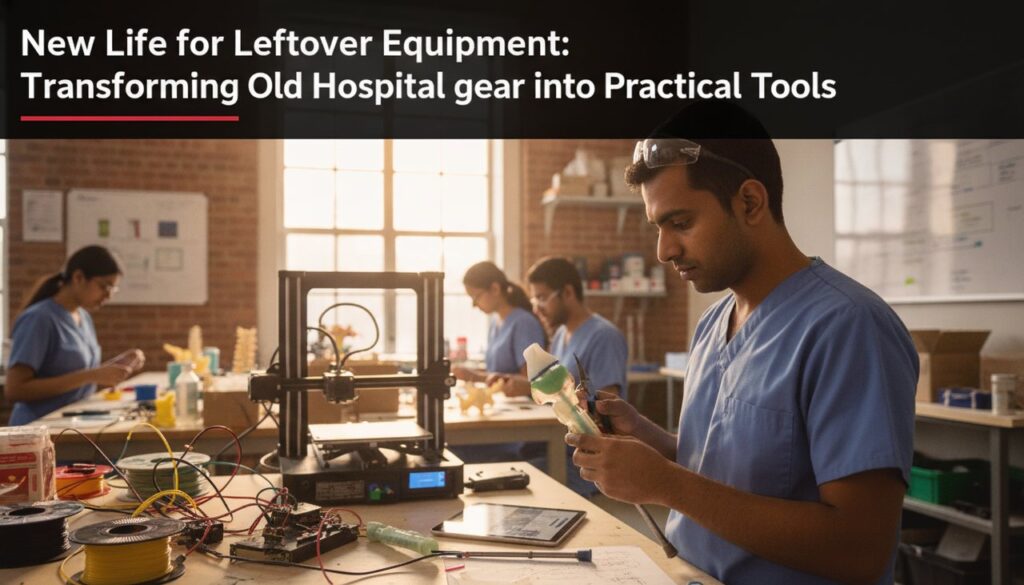
New Life for Leftover Equipment: Transforming Old Hospital Gear into Practical Tools
Every day in hospitals across India, equipment lies dormant, a relic of its former utility. In the corner of storerooms, underutilized machines gather dust, not because they are broken, but because they are outdated. This isn’t just about inefficiency; it’s a missed opportunity. What if these so-called relics could be repurposed into lifesaving tools? What if the very act of transforming them could spark a wave of innovation?
The Comfortable Myth: Newer is Always Better
Many in the medical field operate under the assumption that only the latest, most cutting-edge equipment can deliver quality care. This belief fuels a cycle of constant upgrades, sidelining perfectly functional machinery. Yet, this fixation on the new blinds us to the potential of what’s already within reach. The reality is that innovation doesn’t always mean buying new; it can mean reimagining the old. This is especially pertinent in resource-constrained environments where budgets are tight and needs are numerous.
“Innovation doesn’t always mean buying new; it can mean reimagining the old.”
Reality Check: The Potential of Repurposing
Repurposing outdated medical equipment is not just a stopgap measure; it’s a viable strategy for sustainable healthcare innovation. Consider the possibilities: a retired ultrasound machine becomes a training tool for medical students, or an old ECG machine is transformed into a makeshift device for remote diagnostic applications. These aren’t hypothetical scenarios; they are practical solutions that have been successfully implemented in various settings.
What to Do Instead: Steps to Transforming Equipment
So, how do we start this transformation? Here’s a practical guide to repurposing equipment, with each step tailored to maximize impact:
- Identify Usable Equipment: Not every piece of old equipment is a candidate for repurposing. Focus on items that are in good condition but outdated or redundant due to newer models. A thorough audit of hospital inventory can reveal hidden gems.
- Assess Needs: Engage with healthcare providers to understand their most pressing equipment needs. This ensures that repurposed items are actually useful and not just clutter. Collaborate with clinicians to map out how the equipment can be adapted.
- Prototype and Test: Before full-scale implementation, create prototypes of the repurposed equipment. Test these in real-world settings to ensure they meet the necessary clinical requirements. This phase is crucial to iron out any issues before widespread adoption.
- Train Staff: Equip healthcare workers with the skills to use and maintain the repurposed tools. This not only ensures effective use but also empowers staff to contribute ideas for future innovations.
- Document and Share: Share the successes and challenges faced during the process. Documentation aids in refining future efforts and inspires others to undertake similar initiatives.
The Crucial Step: Engage Clinicians Early
The most critical step in this process is engaging clinicians from the outset. Their insights into patient care and workflow are invaluable for identifying how repurposed equipment can be most effective. By involving them in the ideation and testing phases, you ensure that the tools developed are practical and tailored to real-world needs.
Case in Point: A Story of Success
In a rural clinic in Maharashtra, a team transformed an old anesthesia machine into a cost-effective ventilator. The process wasn’t without its hurdles, regulatory approvals and technical adjustments were significant challenges, but the outcome was lifesaving. This ventilator now supports critical care in an area where resources are scarce, illustrating the profound impact repurposed equipment can have.
This example is not an isolated case. Across the country, similar initiatives are unfolding, each one a testament to the untapped potential of repurposing. By approaching old equipment with a mindset of innovation, we open up a world of possibilities that not only enhance patient care but also foster a culture of resourcefulness and ingenuity.
FAQs
Can all outdated equipment be repurposed?
No, not all equipment is suitable for repurposing. It depends on the condition of the equipment and its potential for modification. Equipment that is damaged beyond repair or poses safety risks should not be considered for repurposing.
How do we ensure the repurposed equipment meets safety standards?
Safety is paramount. All repurposed equipment must undergo rigorous testing and validation to meet existing regulatory and safety standards. Collaborating with engineers and regulatory experts can ensure compliance and safety.
What are the costs involved in repurposing equipment?
The costs can vary significantly depending on the equipment and the extent of modifications needed. However, repurposing is generally more cost-effective than purchasing new equipment. Consider costs related to materials, labor, testing, and certification.
How can I get involved in equipment repurposing initiatives?
Begin by reaching out to local hospitals or organizations involved in healthcare innovation. Joining forums and networks such as MICE Labs can also connect you with like-minded individuals and provide resources to get started.
What support is available for these initiatives?
Organizations like SpecialtyCare and MICE Labs offer programs and resources to support equipment repurposing. They can provide guidance, training, and sometimes financial support to help you navigate the process.
The journey of repurposing old medical equipment is not just about resourcefulness; it’s about redefining what innovation looks like in healthcare. By looking at the old with new eyes, we can turn yesterday’s tools into tomorrow’s lifesavers, making a tangible difference in the lives of those who need it most.