
Beyond the Classics: Innovating Custom Solutions for Uncommon Ward Challenges
In the dim-lit corridors of a government hospital in Mumbai, a resident doctor finds herself grappling with a non-standard problem: a post-operative patient with an unusual wound that conventional dressings can’t adequately protect. This isn’t a scenario covered in textbooks, and there’s no off-the-shelf solution. Yet, it’s a problem that demands an immediate, effective resolution. The stakes? The patient’s recovery time and the potential for infection. While medical innovation often highlights the grand and the new, the real need is often in customizing solutions for these unique, pressing challenges.
The Classic Approach: Off-the-Shelf Limitations
Traditional medical solutions, though effective for standard cases, often fall short when faced with atypical clinical challenges. Take the example of wound care: standardized dressings are designed for average use cases. However, in less common scenarios where wound topology or patient conditions differ substantially, these solutions can be inadequate. The result is a high risk of infection and prolonged recovery times, with the hospital often bearing increased costs due to extended stays and additional treatments.
The reliance on established products also limits the agency of clinicians. They become passive consumers of what the market offers rather than active problem solvers. This is a costly mistake in environments where every minute and every rupee counts. A single extended hospital stay due to an improper wound dressing can cost upwards of INR 5,000 per day, not to mention the intangible cost of patient discomfort and anxiety.
Innovative Custom Solutions: The Path Less Traveled
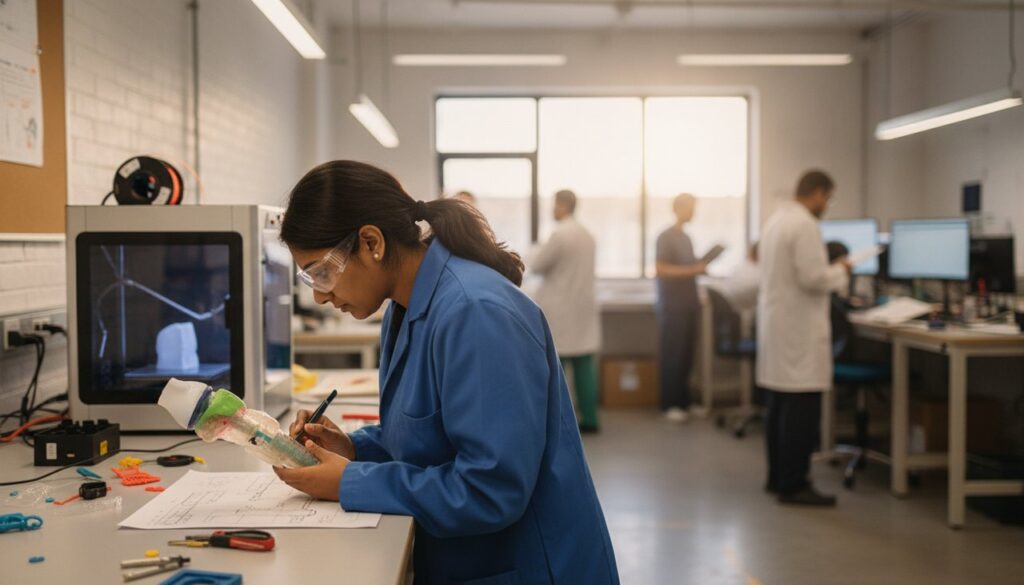
What if clinicians could pivot from being passive recipients to active innovators? The key lies in harnessing existing knowledge and readily available resources to create bespoke solutions. For instance, using 3D printing to design custom-fit wound dressings that conform precisely to a patient’s wound can drastically improve healing times and reduce infection rates.
Custom 3D-printed wound dressings can reduce healing time by up to 50%, offering a significant advantage over standard solutions.
Consider the case of a small team of clinicians in Bangalore who needed a solution for pediatric patients with irregular limb fractures. Traditional casts were cumbersome and inefficient. By collaborating with a local engineering college, they developed a lightweight, breathable splint using 3D printing technology. The result? Reduced healing time and increased patient comfort, achieved at a fraction of the cost of imported alternatives.
A Practical Guide to Innovating Custom Solutions
For clinicians eager to implement custom solutions, the path involves several critical steps, each with its distinct significance:
- Identify the Unique Challenge: Start by clearly defining the problem. Is it a frequent issue like ill-fitting dressings, or something less common like the need for a specific diagnostic tool?
- Leverage Local Resources: Look around your environment. Partner with local engineering schools or tech startups that have the tools and expertise you might lack. This step is crucial in environments with constrained resources.
- Prototype and Iterate: Begin with a basic prototype. Use affordable materials, PLA for 3D printing costs around INR 500 per kg. Iterate based on real-time feedback from its use in clinical settings.
- Consider Regulatory Aspects: While prototyping is relatively free-form, moving into production requires understanding local regulatory frameworks. The CDSCO provides guidelines specific to medical devices in India.
- Deploy and Monitor: Once a solution is in use, closely monitor its effectiveness and safety. Gather data to refine the design and make a case for broader implementation.
The Most Critical Step: Local Collaboration
Among these steps, leveraging local resources is the most crucial. Why? Because it turns perceived constraints into opportunities. Partnering with engineering students or local tech startups can provide the innovation push needed to move from idea to execution without prohibitive costs. This not only fosters a culture of innovation but also democratizes the process, allowing clinicians to engage directly in the creation of tools and devices.
The Real Cost of Sticking to the Old Ways
Continuing reliance on traditional solutions when better alternatives are within reach is not just a clinical oversight but a financial burden. Every day that a patient remains hospitalized due to inadequate treatment translates to significant costs. Moreover, the inefficiencies trickle down to affect hospital resource allocation, from bed availability to staff time. The choice is clear: innovate or stagnate.
Real Stories, Real Impact
Consider the story of Dr. Anita, a surgeon in a rural hospital, who faced a recurring issue with post-surgical infections due to inadequate sterilization of instruments. With no budget for a high-end sterilization unit, Dr. Anita collaborated with a local NGO to develop a low-cost, portable autoclave using solar energy. The project not only reduced infection rates but also empowered the hospital to handle more surgeries efficiently. Learn more about such solutions in Making It Work: Innovating Affordable Sterility Solutions Beyond the Clean Room.
Conclusion: The Uncomfortable Truth and the Way Forward
The discomforting truth is that the healthcare sector often lags in innovation due to a reliance on established solutions. However, the path to change is not blocked by insurmountable barriers but by a mindset resistant to new ways of thinking. By fostering a culture of innovation, rooted in local collaboration and a willingness to experiment, clinicians can transform the delivery of care.
As you walk the ward today, consider the small, nagging problems you encounter. Each one is a potential innovation waiting to happen. The question is, will you be the one to solve it?