
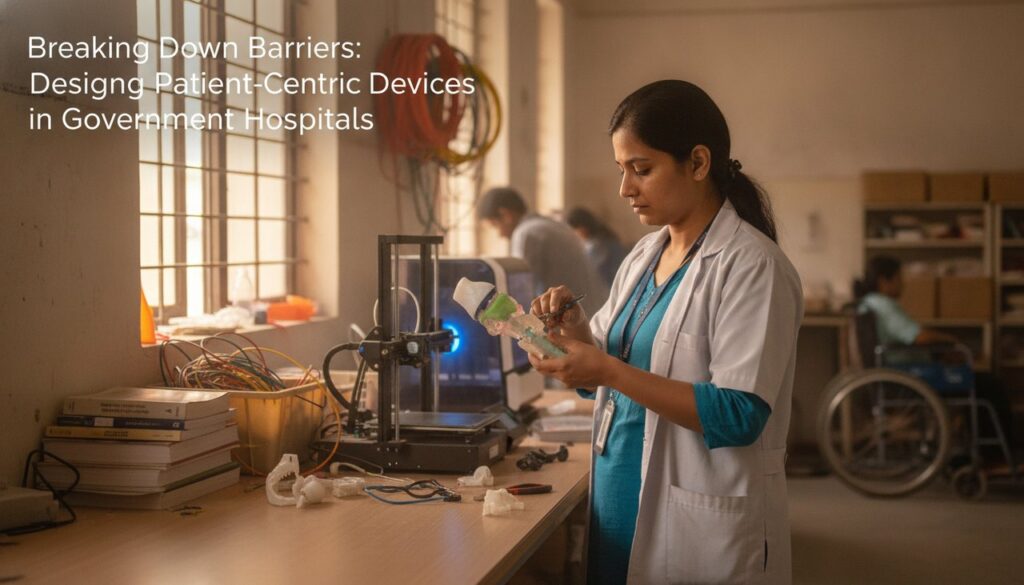
Breaking Down Barriers: Designing Patient-Centric Devices in Government Hospitals
Picture this: a bustling ward in a government hospital in Mumbai, where time and resources are perpetually in short supply. Amid the clamor, a patient struggles with a bulky medical device that seems designed more for the convenience of the manufacturer than the comfort of the user. This all-too-common scenario underscores a glaring gap in healthcare: the lack of truly patient-centric medical devices in environments where they are needed most.
Designing patient-centric devices isn’t just a matter of aesthetics or user-friendly interfaces; it’s a necessity that can directly impact patient outcomes, particularly in resource-constrained settings like government hospitals. Yet, despite the evident need, many barriers persist. Let’s explore why patient-centric design is often sidelined and how we can overcome these challenges to create devices that genuinely serve the patient’s needs.
The Real Costs of Overlooking Patient-Centric Design
When devices are not designed with patients in mind, the consequences are more than just discomfort or frustration. Consider the case of a generic blood pressure monitor used in a rural health center. If it’s too complex for the average patient to operate, or if it requires more power than is reliably available, the device can become a paperweight instead of a life-saving tool. The cost isn’t just the price of the device; it’s the health of the patient who goes undiagnosed or untreated.
In India, device usability can mean the difference between patient adherence and neglect, especially in government hospitals where staff cannot always compensate for design shortcomings.
Beyond the immediate impact on patient health, there’s also a financial cost. Devices that are difficult to use often require more staff time to operate, driving up the cost of what should be routine procedures. This is a significant issue in government hospitals where resources are already stretched thin.
Root Causes: Why Patient-Centric Design Is Neglected
The neglect of patient-centric design in medical devices isn’t just an oversight; it’s a systemic issue rooted in several factors:
- Manufacturer Priorities: Often, the primary focus is on cost-efficiency and ease of mass production. Patient comfort and usability become secondary considerations.
- Lack of Input from Frontline Staff: The people who use these devices daily, patients and healthcare workers, are rarely consulted during the design process.
- Regulatory Constraints: Navigating the regulatory landscape can be so resource-intensive that design innovations take a backseat.
For a deeper dive into designing patient-centric interfaces on a budget, visit our article here.
Steps to Designing Truly Patient-Centric Devices
Creating devices that genuinely meet the needs of patients in government hospitals isn’t just possible, it’s essential. Here’s how to start:
1. Engage with the End-Users
It sounds obvious, but the most critical step is often the most overlooked. Engage with the patients and healthcare workers who will use the device. Conduct interviews, observe workflows, and gather feedback on existing devices. This input is invaluable in identifying what truly matters in the design.
2. Prototype Rapidly and Iteratively
Once you have insights from users, don’t wait to start prototyping. Use affordable materials to create quick prototypes that can be tested and refined. This approach not only saves time but also ensures that the final product is as close to the user’s needs as possible. For more on rapid prototyping, see our guide on prototyping for faster patient triage.
3. Consider the Entire User Experience
Patient-centric design isn’t limited to the device itself. Consider the entire ecosystem: how the device will be used, cleaned, stored, and maintained. A device that’s easy to use but hard to clean or maintain won’t be effective in the long run.
4. Test in Real Environments
A prototype that works in the lab might fail in the field. Test devices in the actual environments where they will be used. This testing should include varied conditions, such as different power supplies, levels of light, and temperatures.
Overcoming Institutional and Regulatory Hurdles
Designing patient-centric devices isn’t just about the design process. Navigating institutional and regulatory barriers is crucial. Understanding the lessons from Mumbai’s surgical innovators can provide valuable insights.
1. Leverage Local Manufacturing
India’s manufacturing capabilities are more advanced than many realize. By leveraging local resources, designers can reduce costs and increase the likelihood of regulatory approval. Local manufacturing also allows for faster iterations and adaptations based on user feedback.
2. Understand Regulatory Requirements Early
Engage with regulatory bodies early in the design process to understand the requirements and constraints. This understanding will help avoid costly redesigns and delays later on.
3. Build a Coalition
Partner with hospitals, NGOs, and government bodies to create a supportive network for innovation. Having allies can ease the way through bureaucratic and regulatory processes, providing a clearer path to implementation.
Conclusion: The Path Forward
Designing patient-centric devices for government hospitals in India is not just about improving healthcare; it’s about breaking down barriers that have long stood in the way of truly effective medical care. By engaging directly with end-users, leveraging local manufacturing, and navigating the regulatory landscape proactively, innovators can create devices that transform patient experiences and outcomes.
The journey is challenging but necessary. The reward is a healthcare system that truly meets the needs of its most important constituency: the patients. Let’s get started.