
Transforming Common Complaints into Usable Surgical Tools: Real Stories from Indian Hospitals
In a bustling surgery ward of a government hospital in Mumbai, a senior resident paused to inspect a rusting surgical instrument. The tool, once vital, now seemed destined for disposal due to its wear and tear. But in this moment of frustration, the resident saw potential. This is not an isolated incident. Across India, clinicians are transforming similar complaints into innovative solutions, turning discarded or problematic tools into devices that meet pressing surgical needs.
The Friction Point: Common Complaints
In Indian hospitals, especially those operating under resource constraints, the wear and tear of surgical tools is a frequent complaint. Instruments often fail to meet the rigorous demands of busy surgical departments. The issue is exacerbated by the absence of certification for those responsible for sterilizing and maintaining these tools, leading to improper cleaning practices and eventual degradation.
Improper sterilization practices are a growing concern, leading to frequent complaints about the usability and safety of surgical tools.
Yet, these complaints have sparked a movement. Clinicians are realizing that with a bit of ingenuity and the right guidance, they can turn these frustrations into functional, innovative solutions.
From Complaint to Creation: The Process
So, how do clinicians transition from identifying a problem to creating a usable tool? The process is more accessible than it seems, requiring a mix of creativity, practical knowledge, and a willingness to experiment with available resources.
1. Identify the Specific Issue
It begins with recognizing the specific failure point of an instrument. Is it the material that degrades too quickly? Is it the design that doesn’t meet the current surgical needs? Identifying this core issue is crucial. For instance, a common complaint might be that a scalpel doesn’t retain its sharpness, affecting surgical precision.
2. Explore Existing Resources
Once the issue is pinpointed, the next step is to explore available resources. Indian hospitals are goldmines of unused or outdated equipment that can be repurposed. For example, an old surgical lamp can provide the metal needed for new tool prototypes. Clinicians can find guidance in resources like transforming old hospital gear into practical tools.
3. Prototype with Accessibility in Mind
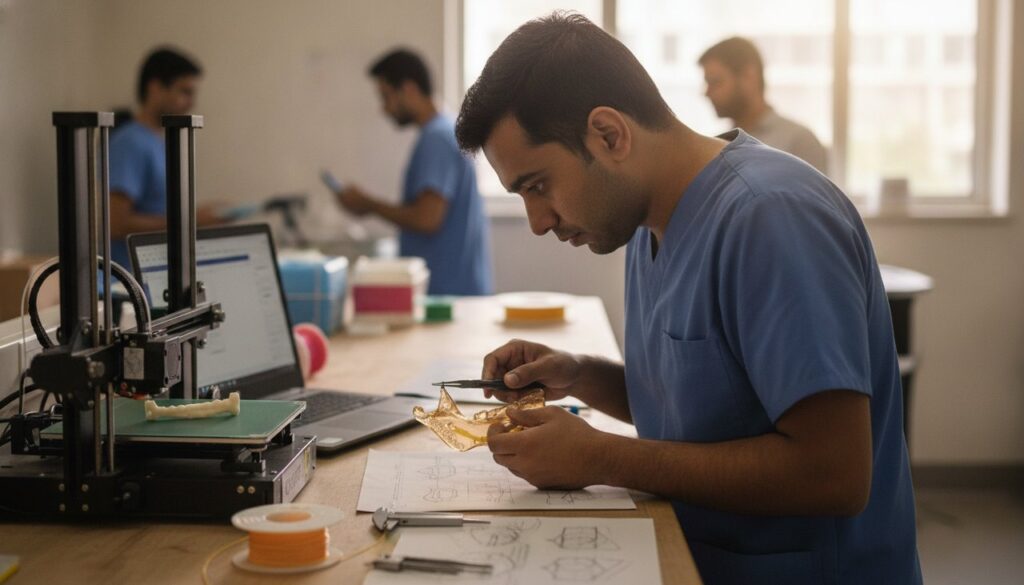
The prototype stage often involves 3D printing, a cost-effective method to test new designs. This technology is becoming increasingly accessible, allowing for rapid iteration and customization. Clinicians can use online platforms or partner with local labs to create their prototypes, as seen in initiatives like ward-driven insights.
4. Test in Real Clinical Settings
Testing these prototypes in actual surgical settings is crucial. This step involves evaluating the tool’s performance, safety, and usability during real operations. Feedback from surgical teams helps refine the design, ensuring it meets the practical needs of clinicians.
5. Iterate Based on Feedback
Iteration is perhaps the most important step. Based on feedback, clinicians can make necessary adjustments to improve the tool’s functionality. This iterative process ensures that the final product not only addresses the initial complaint but also integrates seamlessly into the surgical workflow.
The Impact: Real Stories of Innovation
Consider the case of a team of surgeons in Delhi who faced constant issues with their bone saws. The tools were heavy and difficult to maneuver, leading to fatigue and decreased precision during lengthy surgeries. By collaborating with a local tech institute, they developed a lightweight, 3D-printed model that was ergonomically designed for ease of use. This new tool drastically improved surgical outcomes and reduced operating time.
Similarly, a group of nursing staff in Kerala identified recurring issues with faulty suction devices. They engineered a new attachment using discarded plastic parts, which not only resolved the functionality issue but also increased the device’s efficiency. These innovations highlight the potential of transforming common complaints into practical solutions.
The Scrappy Path: Overcoming Common Barriers
While the journey from complaint to creation is promising, it is not without challenges. Sterility, regulatory approvals, and cost constraints often complicate the process. However, these barriers can be navigated with strategic thinking and collaboration.
Clinicians must understand the regulatory landscape and work within it. Engaging with local regulatory bodies early in the process can streamline approvals. Furthermore, leveraging local manufacturing capabilities can reduce costs and ensure the tool is tailored to the needs of Indian hospitals.
Collaboration with local regulatory bodies and manufacturers can turn potential barriers into opportunities for innovation.
Conclusion: A Call to Innovate
The transformation of common complaints into usable surgical tools is more than just a problem-solving exercise; it’s a testament to the ingenuity and resilience of Indian clinicians. By embracing a proactive, hands-on approach, they are not only improving surgical outcomes but also setting new standards for innovation in medicine.
In the end, the power to innovate lies within the very wards where these complaints arise. With the right mindset and resources, clinicians can continue to turn everyday frustrations into pioneering medical solutions, shaping the future of surgery in India and beyond.