
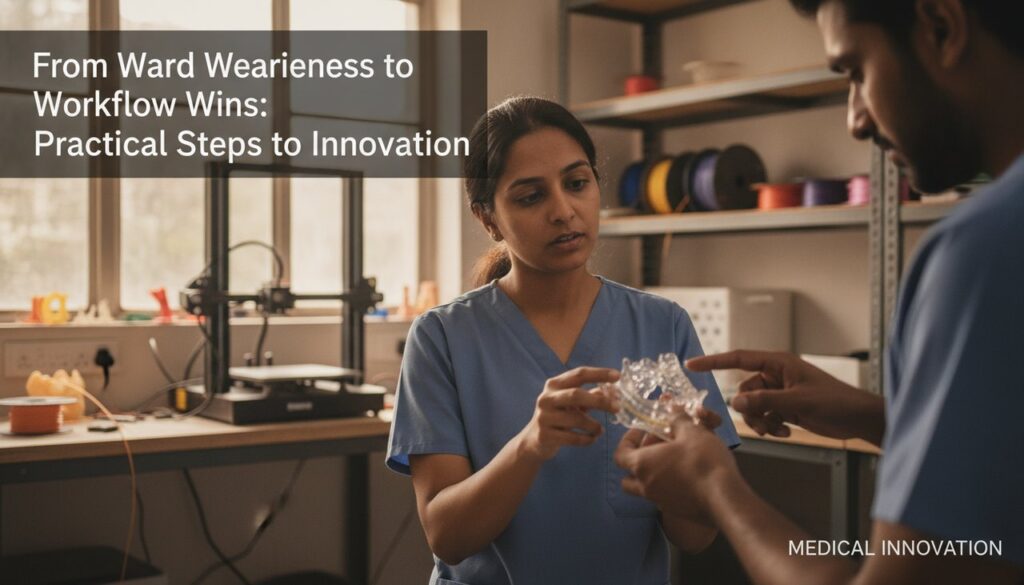
From Ward Weariness to Workflow Wins: Practical Steps to Innovation
Picture this: you’re standing in the bustling corridors of a government hospital in Mumbai. The air is thick with urgency, and every corner seems to echo with the sounds of hurried footsteps and the beeping of monitors. The clinical staff is overwhelmed, not by the complexity of medical cases but by the inefficiencies clogging their workflow. Despite their expertise and dedication, they spend more time navigating administrative hurdles than addressing patients’ needs. This is not just an Indian healthcare problem, it’s a global one. But here’s the catch: the solution is not buried in complex algorithms or expensive tech; it’s within reach, and it starts with you.
Before you dismiss this as another “innovation is key” sermon, let’s dismantle a common myth: innovation in healthcare requires deep pockets, engineering degrees, or a stroke of genius. The reality is far simpler, and more empowering. You don’t need a grant or permission to innovate; what you need is a change in perspective and a set of practical steps that can turn frustration into function.
The Patient Approach: A Lesson from Lego
Let’s borrow a lesson from a surprising source: Lego bricks. Imagine three friends, each with a different strategy for building toys. The impulsive builder picks up pieces that immediately form simple toys, while the strategic one selects versatile pieces that might not yield immediate results but promise complex creations down the road. The third, indifferent to strategy, picks pieces at random. This analogy mirrors the innovation strategies in healthcare: immediate fixes, strategic long-term planning, and haphazard attempts. The question is, which approach builds a sustainable future?
In the short term, the impulsive builder appears successful, but over time, the strategic one wins. This is the “patient strategy” of innovation. It’s about understanding the core components of your system and making deliberate choices to enhance them, even if the benefits aren’t immediate. In healthcare, this means identifying workflow bottlenecks and addressing them with scalable, sustainable solutions.
Turning Frustration into Functional Change
So, how do you turn ward weariness into workflow wins? Start by identifying the specific pain points. Is it the endless paperwork, the inefficient allocation of resources, or perhaps a lack of communication tools? Once identified, the solution is not to overhaul the entire system but to implement targeted changes that address these issues.
Innovation is not about doing everything; it’s about doing the right things effectively.
1. Identify and Prioritize
The first step is to identify the most pressing issues. Use a simple method: shadow a nurse or a clinician for a day. Note the tasks that consume the most time without adding value to patient care. Is it the manual data entry? The patient discharge process? Create a list and prioritize them based on impact and ease of implementation. The goal is not to revolutionize but to evolve.
2. Prototype Solutions
Once you have a prioritized list, it’s time to prototype solutions. This doesn’t require high-tech labs or expensive equipment. Use simple, available resources. For instance, if data entry is a bottleneck, consider a basic AI tool to automate repetitive tasks. The recent launch of an AI chatbot at JJ hospital in collaboration with BeyondChats is a testament to how simple tech can transform workflows.
3. Test and Iterate
Deploy your prototype in a controlled environment. Gather feedback from the end-users, clinicians, nurses, and administrative staff. Iterate based on their input. This step is crucial. The best solutions are born from continuous refinement and adaptation to ground realities.
4. Scale What Works
Once the solution proves effective, it’s time to scale. But remember, scaling should be as deliberate as prototyping. Consider resource constraints, such as budget and training requirements. Leverage local manufacturing for cost-effective scaling and ensure compliance with regulatory standards, especially the CDSCO guidelines.
5. Document and Share
Finally, document your journey. Share what worked and what didn’t with your peers. This not only fosters a culture of innovation but also accelerates collective learning. You become a part of a movement that is redefining healthcare, one small innovation at a time.
The most impactful innovations often start with a single step, and the courage to take it.
FAQs
How do I encourage innovation in a resource-constrained environment?
Start small. Use low-cost prototyping methods and leverage local resources. Encourage a culture of sharing and collaboration to pool skills and insights.
What if my innovation fails?
Failure is a part of the innovation process. Use it as a learning opportunity. Analyze what went wrong, refine your approach, and try again. Remember, every failure brings you one step closer to success.
Can I innovate without an engineering background?
Absolutely. Innovation is about solving problems creatively. Collaborate with engineers or use available tools to bring your ideas to life. Your clinical expertise is invaluable in identifying and addressing real-world issues.
What’s the next step after identifying a problem?
Prototype a solution. Use simple tools and test in a controlled environment. Gather feedback, iterate, and refine. Once effective, consider scaling while ensuring regulatory compliance.
In the end, innovation in healthcare is less about grand gestures and more about the small, deliberate steps that lead to significant improvements. The path from ward weariness to workflow wins is not a sprint; it’s a marathon. But with every step, you’re not just changing a system; you’re transforming lives. So, lace up your shoes and start running. The finish line is closer than you think.