
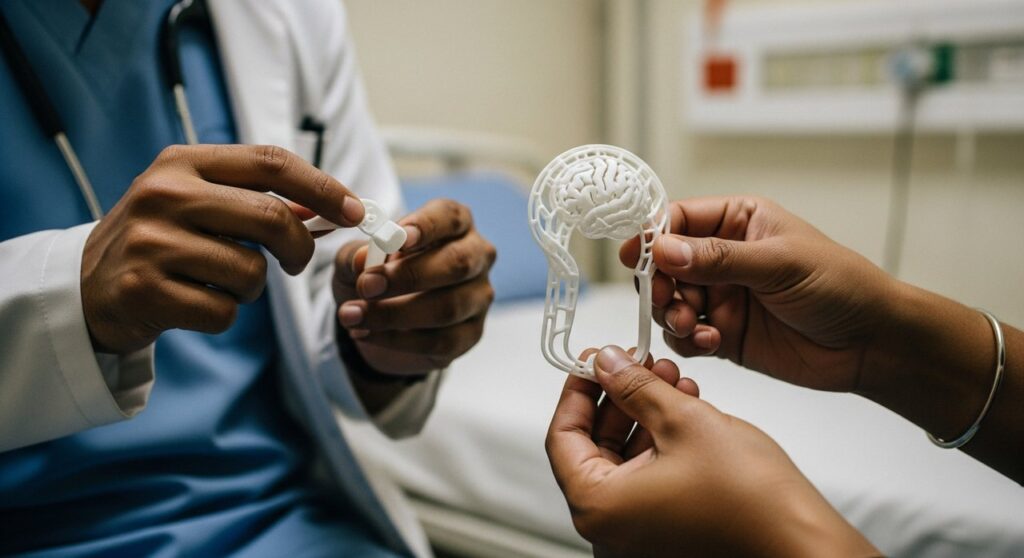
A Clinician’s First Step: Sketching Your Own Device Design
It’s a typical day on the ward when you notice it, the same procedural hiccup that’s been plaguing your rounds for weeks. A piece of equipment doesn’t quite fit, a process stumbles on some small, repeated flaw. It’s a moment every clinician recognizes: the intersection between clinical insight and the spark of innovation. Yet, how many clinicians realize that this is where their journey as a med-tech innovator begins?
The reality is that medical innovation often starts with a simple sketch, a rough drawing on a napkin, a scribble in the margins of a notebook. The first step in device design isn’t a leap into CAD models or patent searches; it’s the act of articulating a problem and envisioning a solution. Here’s how you, a clinician with no formal engineering background, can begin sketching your own device design.
Identify the Clinical Gap
Before you reach for a pencil, pause. The most profound innovations address real clinical needs, not imagined ones. You’re in a unique position to identify these gaps because you experience them firsthand. Consider:
- What specific problem are you solving? Is it a workflow issue, a device malfunction, or a patient safety concern?
- Who experiences this problem? Is it a widespread issue affecting multiple departments or a niche concern?
- How are current solutions falling short? Is there a device that almost works but needs improvement?
Remember, a clear understanding of the problem is more valuable than any initial solution. Define the problem well, and you’re halfway to a good design.
Sketch, Don’t Engineer
With a problem in mind, it’s time to sketch your solution. This isn’t about creating a detailed engineering drawing but rather about capturing the essence of your idea. Here’s how to get started:
- Draw the Basics: Start with basic shapes and lines to represent your concept. Don’t worry about dimensions or materials yet.
- Annotate: Label the parts of your sketch. What does each component do? How do they connect?
- Iterate: Don’t be afraid to redraw and refine your sketch. Each version should bring you closer to how the device might function.
At this stage, it’s beneficial to explore how other clinicians have turned their ward frustrations into prototypes. This can provide inspiration and guidance as you refine your design.
Consider Usability and Functionality
Usability is critical in medical device design. A device that isn’t user-friendly will find little traction in the fast-paced environment of a hospital. Think about:
- Ease of Use: Can the device be operated efficiently by someone with basic training?
- Intuitive Design: Does the design make sense at a glance? Are the functions clear?
- Feedback Mechanisms: Does the device provide clear feedback to the user? This could be visual, auditory, or tactile.
For a deeper dive into why usability matters, consider reading Why Usability is Critical in Medical Device Design.
Resource Constraints and Local Context
Designing for the Indian healthcare system means acknowledging resource constraints. You’re not just designing a device; you’re designing for affordability and manufacturability. Consider:
- Materials: What materials are readily available locally?
- Manufacturing: Can the device be produced using local manufacturing capabilities?
- Cost: What’s the estimated cost of producing the device at scale? Can it be made affordable for widespread use?
These considerations are crucial to ensuring that your design can transition from a sketch to a tangible product that fits within the local healthcare ecosystem.
Moving Forward: Beyond the Sketch
Once your sketch is ready, it’s time to look at turning it into a prototype. This involves selecting materials, understanding manufacturing processes, and possibly engaging with engineers for technical feasibility. Remember, though, that the sketch is your blueprint. It’s what guides conversations and decisions as you move forward.
The journey from sketch to surgery is rarely straightforward, but it begins with a clear vision and a simple drawing.
Your role as a clinician is invaluable in this process. You bring insights that no engineer can, rooted in the real, messy, sometimes chaotic world of healthcare delivery. And if you’re wondering whether you need official permission or a grant to start this process, you don’t. The scrappy path is often the most innovative.
By taking the first step to sketch your idea, you’re not just designing a device; you’re building a bridge between clinical need and technological innovation. And that’s a journey worth embarking on.