
Breaking the Cost Barrier: Building Effective Diagnostic Devices for Rural Health Centers
Rural health centers are the unsung heroes of healthcare, often operating under immense constraints to deliver essential services to remote populations. Yet, the barriers they face, limited specialist availability, scarce resources, and geographic isolation, are formidable. The common belief is that sophisticated diagnostic devices are out of reach for these centers, a luxury reserved for urban hospitals. This is a myth, and it’s time to dismantle it.
The Myth of Inaccessibility
Most people assume that advanced diagnostic tools are inherently expensive and require specialized expertise to operate. This perception keeps rural healthcare providers from even considering these tools, allowing the status quo of inadequate care to persist. But the reality is that diagnostic innovation doesn’t have to be costly or complex. It can be smart, simple, and specifically designed to meet the needs of rural health centers.
Reality Check: The True Cost of Inaction
Ignoring technological advancements in diagnostics isn’t just a missed opportunity, it’s a costly mistake.
When rural health centers shy away from adopting diagnostic technologies, they incur hidden costs. Delayed diagnoses lead to advanced disease states, requiring more intensive intervention and ultimately costing more in both human and financial terms. For instance, untreated diabetes complications can lead to hospitalizations that could have been prevented with timely diagnosis.
The underlying issue isn’t the technology itself but the perception of its inaccessibility. Rural clinics often don’t realize that affordable, effective solutions exist and can be implemented without an engineering degree or massive budget.
What You Can Do Instead
Here’s how rural health centers can break through the cost barrier and integrate effective diagnostic devices:
1. Embrace Simplicity in Design
Often, the best solutions are the simplest ones. Devices that focus on core functionalities rather than a multitude of features are not only cheaper but also easier for healthcare workers to use. Consider starting with basic, fundamental diagnostics that can be conducted with minimal training. The key is to focus on the most common conditions affecting your community and target those first.
2. Leverage Local Manufacturing and Resources
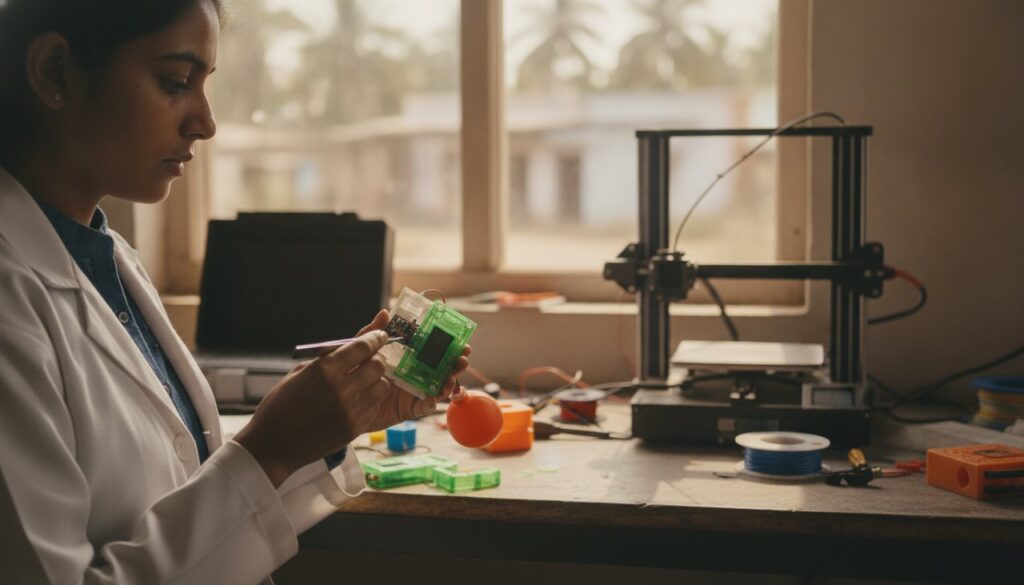
Local manufacturing can drastically cut costs and make devices more readily available. In India, for example, government hospitals have successfully utilized local resources to develop essential medical devices. For a detailed look at how this has been achieved, you can read more about cost-effective prototyping in Indian hospitals.
3. Utilize AI and Mobile Technology
AI-driven tools and mobile technology can transform basic diagnostic devices into powerful diagnostic solutions. AI can assist in interpreting results, while mobile connectivity can facilitate telehealth consultations, making it easier for rural clinics to access specialist advice without the need for travel. This approach not only enhances the diagnostic capability but also extends the reach of healthcare providers.
4. Start Small, Scale Appropriately
Begin with pilot projects to test the feasibility and effectiveness of new diagnostic tools. Measure outcomes, gather feedback, and refine your approach before scaling up. This incremental approach allows you to manage risks and ensure that the technology integrates smoothly into your existing systems.
5. Build Community Trust and Involvement
The success of any healthcare innovation in rural areas hinges on community acceptance. Engage with local leaders and residents to build trust and encourage the adoption of new technologies. When communities understand the benefits, they are more likely to support and sustain these innovations.
Conclusion: A Call to Action
The opportunity to revolutionize rural healthcare through cost-effective diagnostic devices is real and achievable. By rejecting the myth of inaccessibility and embracing practical, innovative solutions, rural health centers can overcome the barriers that have long hindered their progress. The path is not without challenges, but the rewards, improved health outcomes and empowered communities, are worth the effort.
The question isn’t whether rural health centers can afford to invest in diagnostic technology, but whether they can afford not to. The future of rural healthcare depends on our willingness to innovate and adapt. Let’s start building it today.