
Thinking Inside the Box: Prototyping Affordable Storage Solutions for Medical Equipment
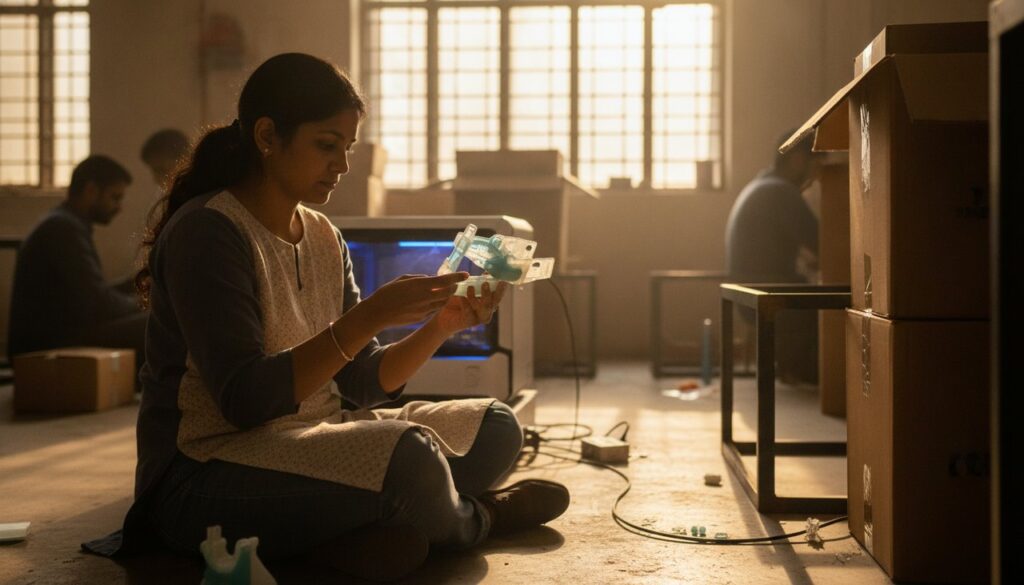
In a bustling ward at a government hospital, a resident fumbles with a cardboard box, trying to retrieve a vital piece of medical equipment. The box, battered and sagging, was supposed to protect its contents during transport from the storage room. Instead, it’s become a source of frustration and delay, with the potential to impact patient care. This isn’t an isolated incident; it’s a scene repeated in countless hospitals across India, where inadequate packaging solutions impede the seamless delivery of medical equipment and ultimately, healthcare.
The inefficiency of this makeshift packaging raises a question that many medical practitioners are starting to ask: how can we design affordable yet effective storage solutions for medical equipment? The answer lies in prototyping, not just thinking outside the box, but inside it, too. Let’s explore how we can prototype affordable storage solutions tailored to the unique demands of medical environments.
The Real Cost of Poor Packaging
Inadequate packaging isn’t just a minor inconvenience; it’s a costly oversight. Damaged equipment can result in delayed procedures, increased healthcare costs, and in severe cases, compromised patient safety. Imagine a diagnostic device rendered unusable because of a cracked screen, a direct result of insufficient packaging during transit. The financial burden of replacing or repairing equipment is significant, especially in resource-constrained environments where every rupee counts.
“The cost of a single damaged piece of equipment can often exceed the investment required for a robust packaging redesign.”
Understanding Packaging Requirements
Designing effective packaging for medical equipment begins with understanding its core requirements. It’s not just about protecting the product from external damage but ensuring its usability and sterility upon reaching the end user. Here’s what to consider:
- Product and Package Integrity: The packaging must maintain its structural integrity under various conditions, including storage, transportation, and handling.
- Cost-Effectiveness: The solution must be affordable without compromising quality, especially in settings where budget constraints are a reality.
- Usability: The packaging should facilitate easy opening and use, even by healthcare workers wearing gloves.
- Manufacturability: The design should be feasible to produce with locally available materials and technology.
Prototyping: The Key to Innovation
Prototyping is a powerful tool in the development of effective storage solutions. It allows for iterative testing and refinement, ensuring that the final product meets all required specifications. Here’s how to approach it:
- Identify the Problem: Start by clearly defining the issues with current packaging. Is equipment frequently damaged? Do users struggle to open it? Understanding the problem is half the battle.
- Generate Ideas: Use constraints and analogies to brainstorm solutions. How might the problem be solved if you approached it like IKEA solving space constraints?
- Create Prototypes: Develop initial models using materials like cardboard, foam, or recycled plastics. This stage is about testing ideas, not creating a perfect product.
- Test and Refine: Conduct tests under real-world conditions to assess durability, usability, and cost. Gather feedback from users to make necessary adjustments.
- Finalize the Design: Once a prototype meets all requirements, finalize the design for production.
Leveraging Local Resources
In India, leveraging local resources and manufacturing capabilities is crucial for creating affordable solutions. By collaborating with local manufacturers and using readily available materials, you can significantly reduce costs and improve the sustainability of your solution. Additionally, understanding the 3D-printing potential can aid in developing custom parts that might not be available off-the-shelf.
Case Study: A Successful Packaging Redesign
Consider a recent project at a medical innovation lab in Mumbai. Faced with the challenge of frequent equipment damage during transport, a team developed a new packaging design using foam inserts and reinforced cardboard. The prototype went through several iterations before achieving the perfect balance of protection and cost-effectiveness.
The result? A 40% reduction in equipment damage incidents and a packaging cost that was 30% lower than the previous solution. This redesign didn’t just save money; it improved the overall efficiency of the hospital’s supply chain, demonstrating the power of prototyping in real-world applications.
Addressing Sterility Concerns
For medical equipment, maintaining sterility is as critical as physical protection. Packaging must be designed to withstand sterilization processes without compromising its integrity. If this is a challenge, explore field-tested hacks for clean medical device prototyping to ensure your packaging meets stringent sterility requirements.
Embracing Resource Constraints
In many Indian hospitals, resource constraints are a daily reality. Instead of viewing them as obstacles, consider them opportunities to innovate. By leveraging constraints, you can foster creativity and push for more efficient solutions. How might you design a packaging solution that uses minimal materials while still providing maximum protection?
“Constraints aren’t barriers; they’re catalysts for innovation.”
The Path Forward
As we strive to improve healthcare delivery, rethinking packaging solutions for medical equipment is a critical step. By embracing prototyping and leveraging local resources, we can develop affordable, effective solutions that enhance the efficiency and safety of medical practices. The next time you encounter a packaging failure, don’t just see it as a problem. See it as an opportunity to innovate and make a tangible difference in the healthcare landscape.
FAQs
Why is prototyping important in developing medical equipment packaging?
Prototyping allows for iterative testing and refinement of packaging designs. It helps identify issues early and ensures the final product meets all necessary requirements, including protection, usability, and cost-effectiveness.
How can local resources be leveraged in packaging design?
By collaborating with local manufacturers and using readily available materials, you can reduce costs and improve sustainability. Local resources also enable quicker iterations and adaptations to meet specific needs in the Indian healthcare context.
What are some common challenges in medical equipment packaging?
Common challenges include maintaining product integrity, ensuring sterility, and balancing cost with functionality. Usability is also a critical factor, as packaging must be easy to handle and use in busy medical environments.
How can we ensure packaging meets sterility requirements?
Packaging must be designed and tested to withstand sterilization processes. Exploring field-tested solutions and consulting with experts can help ensure packaging maintains sterility without compromising its structural integrity.