
When a Drip Fails: Prototyping Better IV Solutions from Ward Experience
The clock ticks ominously in the ER. A patient lies anxious, vulnerable, with nurses attempting yet another intravenous (IV) access. It’s their third attempt, and veins are proving elusive. The room’s tension is palpable, time is wasting, and the urgency of the situation is growing. This scene is not uncommon in hospitals, where difficult intravenous access (DIVA) can turn routine procedures into significant hurdles, delaying critical treatments and escalating patient distress.
In many healthcare settings, particularly in resource-constrained environments like India’s government hospitals, the failure of an IV insertion isn’t just a momentary inconvenience; it’s a systemic problem with costly repercussions. The underlying issue? A combination of patient-specific factors like obesity and dehydration, compounded by inadequate training and resources available to healthcare providers. But what if the solution to this pervasive problem lies not in more advanced technologies or costly interventions, but in the hands of those who’ve experienced these challenges first-hand?
From Ward Challenges to Innovative Solutions
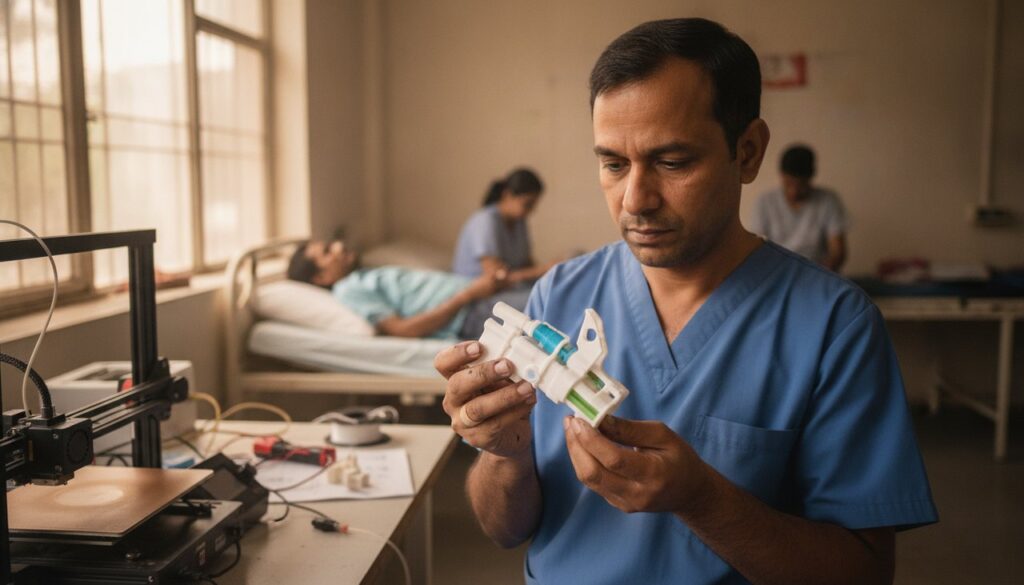
Imagine the potential locked within the minds of clinicians who face these IV challenges daily. Often, they are the ones who best understand the nuances of the problem and are thus best positioned to prototype solutions. Yet, many believe that innovation is the purview of engineers and technology experts, not medical professionals. This notion needs dismantling. Clinicians can indeed drive innovation, especially when they understand both the problem and the clinical environment intimately.
Clinicians are not just users of medical technology, they can be creators, driving solutions from firsthand experience.
Take the example of a recent initiative at Sheikh Shakhbout Medical City (SSMC), Abu Dhabi. Here, clinicians transformed their frustrations with DIVA into a structured, data-driven approach to improve success rates. By implementing an IV escalation pathway and emphasizing advanced nurse training, they saw a first-attempt success rate of 68.8%. This program illustrates how clinical insights can lead to substantial improvements in patient care.
The Ground Reality: Why IV Access Fails
Let’s dissect why IV access often fails. Besides patient-specific variables, provider-related challenges play a significant role. Inadequate training, improper technique, and unfamiliarity with equipment are common culprits. For instance, many nurses may not be adept at using ultrasound guidance for IV cannulation, a technique shown to improve success rates significantly.
Furthermore, the lack of a dedicated IV access team means that floor nurses, already stretched thin, are often left to manage these complex cases. This not only increases the likelihood of multiple failed attempts but also leads to inconsistent patient care. The solution? A focus on specialized training and the creation of dedicated teams, akin to the ICON initiative at SSMC, which can significantly streamline the process.
Practical Steps Towards Better IV Solutions
The first step in addressing DIVA is acknowledging its prevalence and its impact on patient care. From there, a structured approach can be developed. Here’s what can be done:
- Implement Structured Escalation Pathways: As demonstrated by SSMC, having a clear protocol for escalating difficult cases to more experienced clinicians can reduce delays and improve patient outcomes.
- Invest in Training: Regular workshops and courses on IV best practices, such as ultrasound-guided cannulation, should be mandatory. For example, implementing an ultrasound-guided course for advanced nurse practitioners can enhance skill sets significantly.
- Utilize Data-Driven Insights: Collecting and analyzing data on IV access attempts can identify patterns and inform training needs. At SSMC, data collection through EMRs highlighted the times and conditions when difficulties were most likely to occur.
- Prototype Solutions: Encourage clinicians to turn their experiences into prototypes. Whether it’s a new device or a modified technique, grassroots innovation can provide practical solutions. Our guide on turning clinical challenges into prototypes is a valuable resource.
Breaking Barriers to Innovation
One of the biggest barriers to innovation in clinical settings is the myth that substantial resources, including advanced engineering knowledge and significant funding, are required. This isn’t true. Many successful innovations start with simple ideas and minimal resources. For instance, the use of 3D printing to create personalized medical solutions is gaining traction in India, illustrating that innovation can indeed be cost-effective and accessible.
Moreover, local manufacturing and leveraging existing technologies can significantly reduce costs. By focusing on the specific needs of the Indian healthcare context, clinicians can create solutions that are not only effective but also affordable and scalable. It’s about using what’s available and understanding the constraints, such as sterility and regulatory requirements, to drive meaningful change.
Innovation isn’t about having the most resources, it’s about making the most of the resources you have.
The Path Forward: Empowering Clinicians
To truly address the issue of DIVA, it’s imperative to empower clinicians to innovate. This means providing them with the tools, training, and support necessary to turn their ideas into reality. By fostering an environment where frontline healthcare providers can experiment and iterate, we can unlock a wealth of untapped potential.
Programs like MICE Labs’ PULSE and MEDIC are designed to do just that, help clinicians transform bedside problems into workable solutions using 3D-printed devices, AI tools, and med-tech innovations. These programs serve as a bridge between clinical expertise and technological innovation, demonstrating that when clinicians are given the opportunity to innovate, the possibilities are limitless.
FAQs
Why is DIVA a significant problem in healthcare?
DIVA leads to delays in treatment, increased patient discomfort, and the potential for more invasive procedures, impacting overall patient safety and healthcare efficiency.
How can clinicians be encouraged to innovate?
By providing training in prototyping and innovation, as well as creating an environment where experimentation is encouraged and supported, clinicians can be empowered to drive change.
What role does data play in improving IV access success rates?
Data collection and analysis can identify trends and inform targeted training, helping to pinpoint specific areas where IV access challenges are most prevalent.
Ultimately, when clinicians are part of the innovation process, they can create solutions that are not only effective but also grounded in the realities of the clinical environment. This approach not only improves patient care but also enhances the overall efficiency of healthcare systems, proving that the answers to some of our most pressing challenges might just be found where we least expect them, in the everyday experiences of those on the front lines of care.