
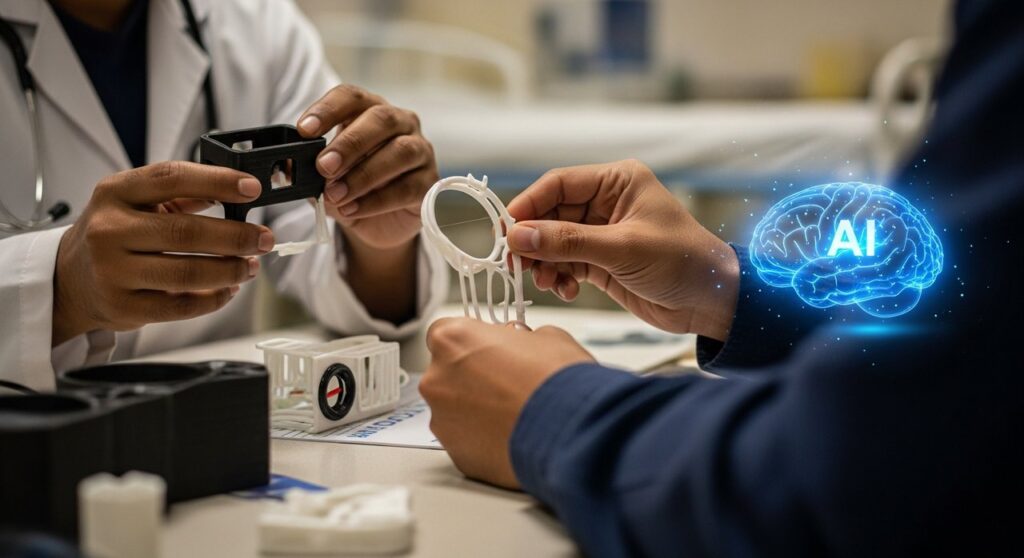
Converting Ward Woes into Workable Prototypes: A Clinician’s Journey
Imagine you’re a clinician in the bustling halls of an Indian government hospital. Your day is filled with the relentless rhythm of ward rounds, patient charts, and the inevitable backlog of spot checks that only tell part of the story. Somewhere in this chaos, a thought strikes you: what if there was a way to continuously monitor patients’ vital signs without adding to the nursing staff’s workload? This isn’t just a fleeting idea but the beginning of a journey, one that transforms ward woes into workable prototypes.
The Myth of the Spot Check
The prevailing belief among many clinicians is that manual spot checks are the gold standard for patient monitoring. After all, they’ve been the backbone of postoperative care for decades. However, these checks are episodic, capturing only a snapshot of a patient’s condition at a given moment. What about the hours in between? This gap in data can be crucial, especially in surgical wards where early warning scores can mean the difference between timely intervention and a missed opportunity. This belief, though comforting in its familiarity, is a myth that needs dismantling.
Manual spot checks capture only a moment in time, missing the continuous fluctuations that could indicate early signs of deterioration.
Wearables: The New Reality
Enter wearable technology, a paradigm shift that promises to fill the gaps left by traditional monitoring methods. Wearables offer continuous monitoring of vital signs like heart rate and respiratory rate, providing healthcare providers with a comprehensive picture of a patient’s condition. This isn’t just a theoretical benefit; studies have shown wearables can reduce adverse events and improve patient outcomes in surgical settings.
Yet, the adoption of these devices in healthcare settings remains sluggish, primarily due to concerns over efficacy in reducing nurses’ workload and improving patient care. The real challenge lies not in the technology itself but in its implementation. Initiating a pilot with wearables can provide the necessary data to evaluate their impact on workload and patient outcomes.
Implementation: A Step-by-Step Guide
For those ready to take the plunge, transitioning from a problem to a prototype involves a nuanced understanding of both technology and healthcare workflows. Here’s a step-by-step guide to help you navigate this journey:
- Identify the Problem: Start with a specific issue you’re facing in your ward. Is it the time-consuming nature of spot checks? Or the delay in detecting deteriorating conditions?
- Research Existing Solutions: Look into available wearable technologies. What are their capabilities and limitations? How do they integrate with existing hospital systems?
- Develop a Prototype: Collaborate with technology partners to create a prototype tailored to your ward’s needs. This might involve customization of existing devices or developing new functionalities.
- Conduct a Pilot Study: Implement the prototype in a controlled setting. Collect data on its effectiveness in reducing workload and improving patient outcomes.
- Evaluate and Iterate: Analyze the data collected from your pilot study. What worked well? What needs improvement? Use these insights to refine the device.
This process isn’t just theoretical; it’s grounded in the real-world experiences of clinicians who have successfully turned frustrations into functional solutions. Consider the journey of Sunita, who used 3D printing to develop personalized finger splints for patients with limited mobility.
The Role of Regulatory and Ethical Considerations
In India, navigating the regulatory landscape is a critical step in the implementation process. The Central Drugs Standard Control Organization (CDSCO) plays a significant role in ensuring medical devices meet safety and efficacy standards. Understanding these regulations is essential for compliance and successful integration of new technologies into clinical practice.
Ethical considerations are equally important. Gaining informed consent from patients and ensuring data privacy are paramount in maintaining trust and adherence to ethical guidelines. These considerations are not just bureaucratic hurdles but essential components of responsible innovation.
Breaking Down Barriers to Innovation
The journey from ward woes to workable prototypes is not without its challenges. Common barriers include a lack of technical expertise, resistance to change, and the perception that innovation requires significant funding or an engineering degree. However, these barriers can be overcome with the right mindset and resources.
At MICE Labs, we believe in empowering clinicians to innovate without the need for extensive resources. Our hands-on programs, like PULSE and MEDIC, are designed to bridge the gap between clinical expertise and the skills needed for prototyping and product development. We provide the tools and guidance necessary to transform ideas into tangible solutions, right here in Indian hospitals.
You don’t need an engineering degree or a grant to innovate. Start with what you have, where you are.
Conclusion: A Call to Action
The question is not whether wearables and other innovations have a place in healthcare but how effectively they can be implemented to enhance patient care and reduce workload. By challenging the myth of manual spot checks and embracing the reality of continuous monitoring, clinicians can play a pivotal role in shaping the future of healthcare.
So, fellow clinicians, the next time you’re on a ward round, take a moment to question the status quo. What frustrations could be transformed into solutions? What small step can you take today towards innovation? The journey may be challenging, but the potential to revolutionize patient care is well within your reach.