
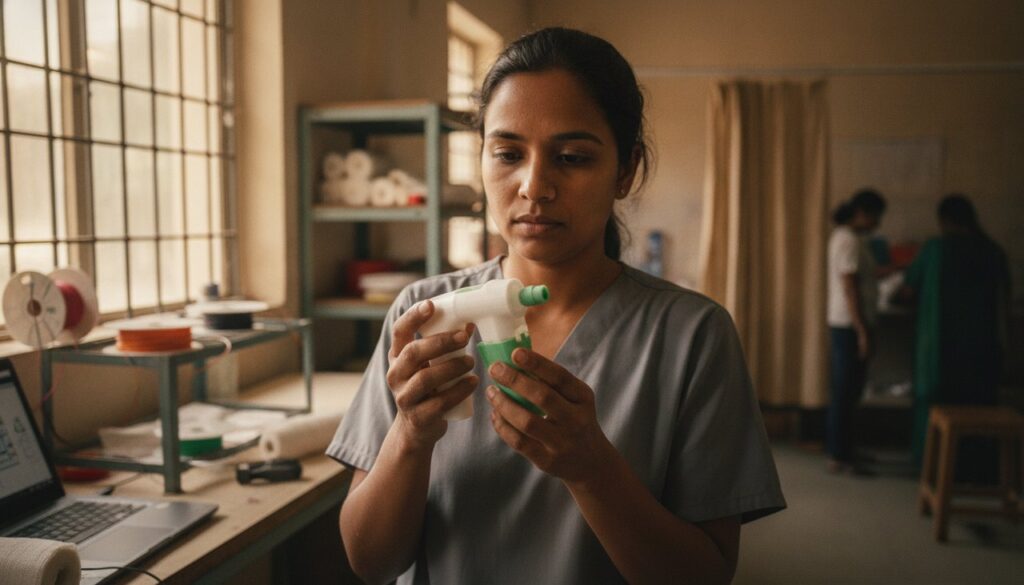
From Needles to Necessity: Developing Needle-Free Alternatives in Resource-Limited Settings
The needle and syringe have long been the icons of vaccination, yet their reign comes with challenges that are often overlooked. In resource-limited settings, these challenges are not just minor inconveniences but significant barriers to effective healthcare delivery. Needle phobia, logistical hurdles, and the need for trained personnel pose real threats to achieving widespread immunization. The promise of needle-free alternatives offers a glimmer of hope, but why aren’t these methods more prevalent in the places they are needed most?
The Needle’s Double-Edged Sword
Needles are efficient, but they come with a cost. In India, where healthcare systems are often stretched thin, the risks and inefficiencies associated with needle-based methods become glaringly apparent. Consider the logistics: maintaining a cold chain for vaccines in a country with vast rural and remote areas is a Herculean task. Add to this the risk of needle-stick injuries, which not only endanger healthcare workers but also contribute to significant medical waste. According to the U.S. Occupational Safety and Health Administration, two million healthcare workers worldwide suffer from needle-stick injuries annually. Imagine the compounded effect of these injuries in Indian settings where healthcare resources are already scant.
A switch to needle-free alternatives isn’t just about innovation; it’s about addressing fundamental flaws in healthcare delivery that needles perpetuate.
Needle-Free Alternatives: A Closer Look
Needle-free alternatives are not just a futuristic concept; they are tangible solutions in various stages of development and implementation. From microneedle patches to nasal sprays and oral vaccines, each method offers unique advantages that could be revolutionary for resource-limited settings.
Microneedle Patches
These patches are akin to band-aids but loaded with microscopic needles that painlessly deliver vaccines directly to the skin’s immune cells. This method eliminates the need for refrigeration and specialized training, making it ideal for deployment in rural India.
Nasal Spray Vaccines
This approach, already used for flu vaccines, involves administering a fine mist into the nasal passages, targeting mucosal immunity. This method is not only needle-free but also mimics natural infection pathways, potentially offering better protection against viruses like COVID-19.
Oral Vaccines
Imagine a vaccine you can drink. Oral vaccines have been a goal for vaccinologists, with existing applications for diseases like polio. Their ease of administration makes them suitable for mass vaccination campaigns, especially in areas with limited healthcare infrastructure.
Jet Injectors
These devices use high-pressure fluid streams to deliver vaccines through the skin without needles. Modern versions address past safety concerns, offering rapid administration without the risk of needle-stick injuries.
The challenge lies not in the technology itself but in its accessibility and affordability in resource-limited settings.
Overcoming Barriers to Adoption
Adopting needle-free alternatives in India requires more than just technological innovation; it demands systemic changes. Here are some concrete steps:
- Cost Reduction: Manufacturing costs for needle-free devices must be minimized to make them affordable. Local production, perhaps through initiatives like building med-tech without a big budget, could significantly reduce costs.
- Regulatory Approval: Navigating the regulatory landscape is crucial. Understanding sterility and safety standards in the Indian context can pave the way for quicker approvals.
- Public Awareness: Educating the public about the safety and efficacy of needle-free alternatives is essential to overcome vaccine hesitancy.
- Infrastructure Support: Developing infrastructure to support the deployment of these technologies is vital. This includes training healthcare workers and ensuring distribution networks are in place.
While these steps are crucial, the most significant challenge remains convincing stakeholders of the long-term benefits. The upfront investment in needle-free technologies may seem daunting, but the potential savings in healthcare costs and increased vaccination rates could far outweigh these initial hurdles.
The Path Forward: A Call to Action
The potential of needle-free alternatives in transforming healthcare in resource-limited settings is immense. Yet, realizing this potential requires a shift in both mindset and policy. It’s time for healthcare innovators, policymakers, and practitioners to join forces and advocate for the integration of these technologies into national health strategies.
Ultimately, the question is not whether needle-free alternatives can replace traditional needles but rather when they will become the norm. The journey from innovation to widespread adoption may be fraught with challenges, but the goal is clear: a healthcare system where accessibility and safety are not luxuries but standard practices.
The future of healthcare in resource-limited settings depends on our willingness to embrace change and invest in technologies that promise a safer, more efficient system for all.