
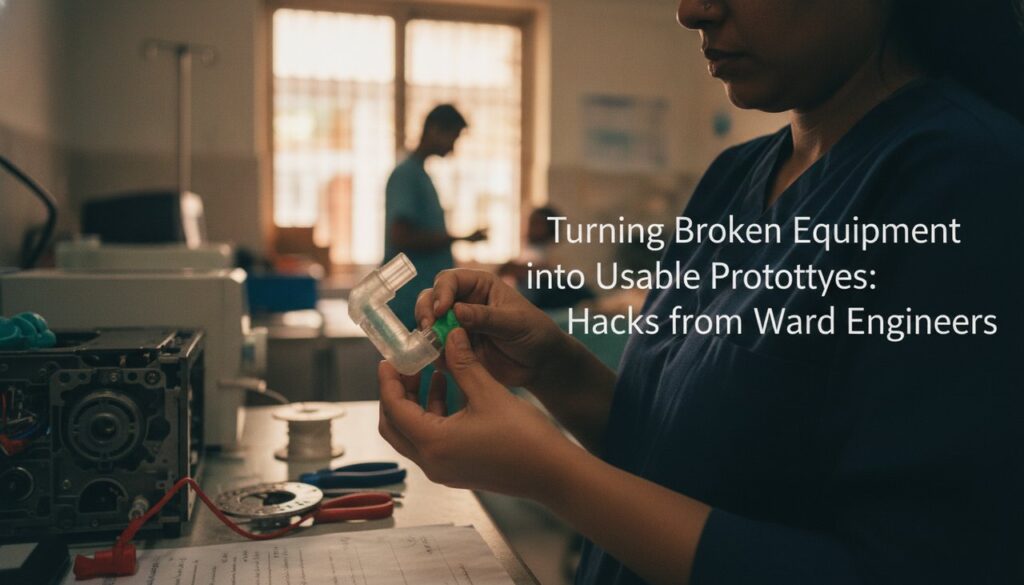
Turning Broken Equipment into Usable Prototypes: Hacks from Ward Engineers
Every clinician knows the frustration of dealing with broken or obsolete equipment in the ward. The ECG machine that’s held together with tape, the infusion pump that only works when tilted just right, these are not just inconveniences; they are barriers to effective patient care. However, what if these seemingly useless devices could become the starting point for innovation? What if the very constraints we face could inspire the creation of prototypes that solve real problems? This is the untapped potential that lies within the walls of our hospitals, waiting for clinician-innovators to take the first step.
The Hidden Cost of Broken Equipment
Let’s talk numbers. Every year, Indian hospitals spend millions of rupees on repairing and replacing broken equipment. But the real cost isn’t just in the budget; it’s in the time and efficiency lost. Every minute spent adjusting a malfunctioning device is a minute taken away from patient care. In a resource-strapped environment, these inefficiencies can lead to compromised patient outcomes and increased clinician burnout. The question is, can we flip this script and turn these liabilities into assets?
Broken equipment doesn’t just cost money; it costs time, the one resource clinicians can least afford to waste.
From Liability to Opportunity: The Prototyping Mindset
What if the broken ECG machine could become a training tool for medical students? Or the outdated infusion pump the basis for a low-cost alternative that can be manufactured locally? This mindset shift, from seeing broken equipment as a liability to viewing it as an opportunity, is the first step in the prototyping journey. It’s about leveraging what’s available and making it work for you, rather than waiting for the perfect tools or conditions.
Consider this real-life example: A group of residents at a Mumbai hospital took a non-functional ventilator and repurposed its parts to create a low-cost simulation device for training new clinicians. This device not only saved the hospital money but also improved training outcomes by providing hands-on experience that was previously out of reach due to high costs.
Step-by-Step: Turning Broken Equipment into Prototypes
So, how do you get started? Here’s a practical guide to help you turn broken equipment into usable prototypes:
- Identify the Problem: Start by pinpointing the specific issue the broken equipment represents. Is it a training gap, a workflow bottleneck, or a patient safety concern?
- Gather a Team: Innovation is a team sport. Assemble a diverse group of clinicians, residents, and even patients if possible. Each brings a unique perspective that can enrich your prototyping process.
- Assess the Usable Parts: Before discarding the broken equipment, evaluate which parts are still functional. This might require a creative eye and some basic mechanical skills.
- Sketch a Plan: Outline how you can repurpose these parts to address the identified problem. Remember, your first prototype doesn’t need to be perfect; it just needs to work well enough to test your concept.
- Build and Test: Use basic tools to assemble your prototype. Test it in a controlled environment to ensure it solves the problem effectively. Gather feedback from your team and be ready to iterate.
- Document the Process: Keep detailed records of what worked and what didn’t. This documentation will be invaluable for future iterations and for sharing your innovation with others.
The most crucial step here is the initial identification of the problem. Without a clear understanding of what you’re trying to solve, it’s easy to get lost in the process. This step sets the direction for everything that follows and ensures that your effort will yield meaningful results.
Common Mistakes and How to Avoid Them
Embarking on the journey of turning broken equipment into prototypes is not without its pitfalls. Here are common mistakes and how to sidestep them:
- Over-Polishing the Prototype: The goal of a prototype is to test an idea, not to create a final product. Spend more time on testing and less on perfecting the aesthetics.
- Ignoring Regulatory Considerations: Especially in the medical field, any new device must comply with CDSCO regulations. Don’t let innovation blind you to these necessities.
- Working in Isolation: Innovation thrives on collaboration. Engage with peers and mentors to refine your ideas and gain new insights.
Real-World Success: The Story of a Low-Cost Nebulizer
In a government hospital in Chennai, a group of medical students noticed that many patients couldn’t afford regular nebulizer treatments. They took a broken nebulizer and re-engineered it using locally sourced materials. The result was a low-cost, functional prototype that could be easily manufactured and distributed to patients who needed it most. This project was not only a technical success but also a testament to the power of resourceful innovation in addressing real-world healthcare challenges.
The Path Forward: Making Innovation Sustainable
Innovation doesn’t end with a working prototype. It requires a sustainable approach to ensure that these solutions reach those who need them. This involves engaging with local manufacturers, understanding market dynamics, and securing the right partnerships. Only then can we ensure that the innovations born out of necessity have a lasting impact on the healthcare system.
The best innovation is the one that gets used, and reused, turning a single idea into a sustainable solution.
FAQs
Why should I bother with prototyping if my hospital can just buy new equipment?
While purchasing new equipment is an option, prototyping allows for the development of tailored solutions that address specific needs in your ward. It also fosters a culture of innovation and problem-solving among clinicians.
Is it legal to modify medical equipment?
Regulations vary, but generally, prototypes developed for internal use or research purposes are permissible. However, any device intended for widespread clinical use must comply with CDSCO regulations. Always conduct due diligence before proceeding.
How do I fund these prototyping projects?
Funding can be a challenge, but many hospitals have innovation funds or grants for such initiatives. Consider partnerships with local businesses or educational institutions as well.
For more insights on turning ward frustrations into med-tech solutions, check out Mapping Out Mishaps: Turning Ward Errors into Usable Design Insights and From Ward Round to Working Prototype: A Step-by-Step Playbook for Turning a Bedside Frustration into a Med-Tech Solution.
In the end, the power to innovate lies within each clinician. It begins with the courage to see broken equipment not as a dead end but as the starting point for something greater. It’s time to embrace the challenge and build the future of healthcare one prototype at a time.