
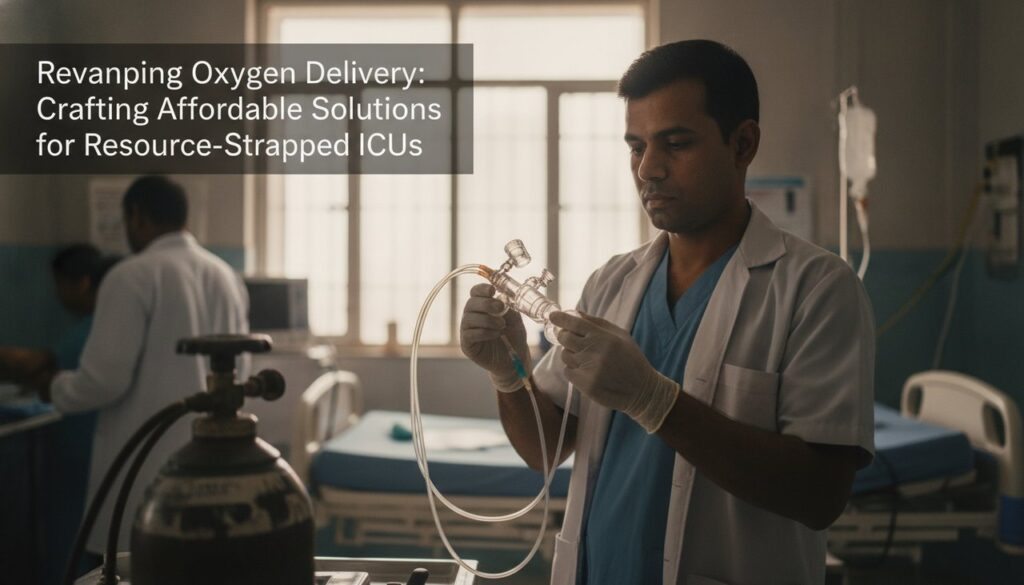
Revamping Oxygen Delivery: Crafting Affordable Solutions for Resource-Strapped ICUs
In a dimly lit room of a rural clinic in India, a mother watches in desperation as the oxygen concentrator flickers off again, the power dying for the third time that day. Her child, suffering from a severe respiratory condition, needs consistent oxygen supply, but the clinic’s resources cannot keep up with the demand. This scene, painfully common across resource-strapped health facilities, highlights a critical gap in healthcare: the delivery of medical oxygen.
More than a million deaths occur annually due to hypoxemia in low- and middle-income countries, a significant portion of which could be prevented with appropriate access to medical oxygen. The COVID-19 pandemic brought this issue into sharp focus, revealing the stark disparities in healthcare resources. While the world scrambled for ventilators and oxygen supplies, many lower-level facilities, often the first line of defense for the most vulnerable, were left without.
The Challenges of Oxygen Delivery in Resource-Limited Settings
Oxygen concentrators, while lifesaving, face significant hurdles in low-resource environments. The devices struggle with unreliable power sources, extreme temperatures, and high humidity levels. Furthermore, a shortage of skilled personnel to maintain and repair these devices exacerbates the problem.
“Some devices suffered catastrophic failure due to accumulated dust, while others managed to deliver high concentrations of oxygen,” commented Brad Bonnette, ECRI’s Senior Project Officer. This variation in performance underscores the need for context-specific solutions.
Given these challenges, how can we design oxygen delivery systems that are both effective and sustainable in such environments? The answer lies in innovative, context-sensitive design and the pragmatic application of existing technology.
Practical Steps to Crafting Affordable Oxygen Solutions
1. Use of High-Flow Nasal Cannula (HFNC)
High-Flow Nasal Cannula (HFNC) has emerged as a cost-effective and efficient oxygen delivery method. HFNC systems are simpler to set up and require less intensive monitoring compared to mechanical ventilation. According to a British study, HFNC reduced the cost of care substantially, providing a scalable option when ICU bed demand cannot be met.
However, scaling up HFNC services requires ensuring a reliable oxygen supply and infrastructure. This involves both procurement of robust equipment and training staff in its use, even in less experienced settings. The lessons learned from field hospitals during the pandemic can inform these efforts.
2. Tailoring Technology to Environmental Challenges
Developing oxygen concentrators that can withstand the environmental conditions of resource-limited settings is crucial. Devices need to be dust-resistant, energy-efficient, and capable of operating with inconsistent power supplies. Partnerships like that of ECRI and Oxygen CoLab, which tested devices under real-world conditions, are essential to identify models that can perform reliably where they are most needed.
Moreover, leveraging local manufacturing capabilities can reduce costs and enhance the adaptability of these devices for specific local challenges.
3. Training and Empowering Local Staff
Lack of trained personnel to operate and maintain oxygen delivery systems is a significant barrier. Establishing training programs that empower local healthcare workers with the skills to manage and troubleshoot these devices can ensure more sustainable operations. These programs should focus on practical, hands-on learning to bridge the gap between existing clinical knowledge and the technical skills needed for device management.
The Role of Policy and Community Engagement
Policy frameworks play a pivotal role in ensuring that oxygen delivery systems are prioritized in healthcare planning. Government and non-governmental organizations must collaborate to create policies that facilitate the procurement and deployment of these systems in underserved areas.
Community engagement is equally important. By involving local stakeholders in the planning and implementation process, solutions can be more effectively tailored to meet the specific needs and preferences of each community. This engagement can also foster a sense of ownership and responsibility, enhancing the sustainability of these initiatives.
A Call for Innovative Approaches
Revamping oxygen delivery in resource-strapped ICUs is not merely a technical challenge; it is a call for innovative thinking and collaboration across disciplines. It requires a shift from relying solely on imported technology to fostering local innovation and adaptation.
The path forward involves embracing the ingenuity of those on the ground, the healthcare workers who see the gaps daily and understand the local context intimately. By empowering them with the tools and knowledge to innovate, we can craft solutions that are not just affordable but also sustainable and effective.
This is not about finding a one-size-fits-all solution. It’s about building a tapestry of context-specific answers that, together, address the diverse challenges of healthcare delivery in low-resource settings.
In the face of daunting challenges, the opportunity to innovate and improve oxygen delivery systems holds promise. It is an invitation to think creatively, act collaboratively, and, most importantly, to learn from those who live the realities of these environments every day.