
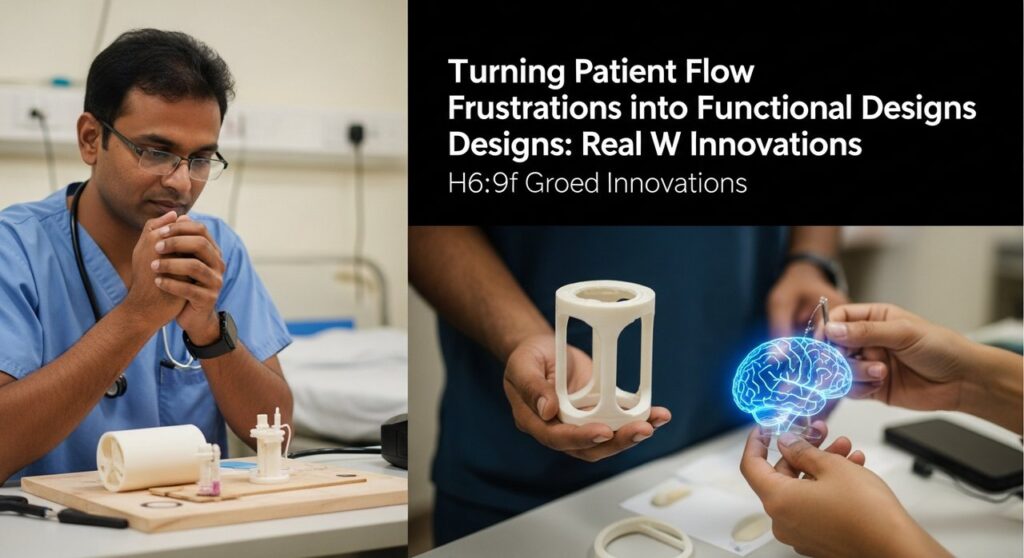
Turning Patient Flow Frustrations into Functional Designs: Real Ward Innovations
In the bustling corridors of a government hospital, a nurse juggles multiple tasks, from administering medication to updating patient charts. Frustration mounts as she spends precious minutes searching for a missing infusion pump, time that could have been spent caring for patients. This is not a rare occurrence but a daily reality in many hospitals across India, where patient flow inefficiencies often lead to compromised care and exhausted staff. The question is not whether this can be fixed but how we can turn these frustrations into functional designs that improve patient flow.
The Hidden Costs of Inefficiency
In hospitals, inefficiencies in patient flow are more than just logistical hiccups; they are costly errors that drain resources and affect patient outcomes. According to a report by the Institute of Medicine, nearly 25% of healthcare spending is wasted due to inefficiencies such as delayed discharges and poor transitions of care. The financial burden is compounded by the emotional toll on healthcare professionals who face burnout from excessive administrative duties and inefficient workflows.
More than a third of nurses waste up to two hours per shift searching for missing medical equipment.
This inefficiency is not just about lost time; it translates into delayed care, increased length of hospital stays, and a ripple effect that impacts patient satisfaction and hospital revenue. The challenge is to identify the root causes and address them with practical, cost-effective solutions that align with the realities of the Indian healthcare system.
Real-World Innovations: Lessons from the Ward
At MICE Labs, we’ve seen frontline healthcare professionals turn bedside frustrations into innovative solutions. Consider the case of a junior doctor who, frustrated with the time-consuming process of locating medical equipment, developed a simple track-and-trace system using RFID tags. This system reduced search times by 40%, allowing staff to focus more on patient care.
Another example is a nurse-led initiative that streamlined the discharge process by standardizing discharge protocols and using digital tools to automate paperwork. This change reduced discharge times by 30%, freeing up beds and reducing patient wait times in the emergency department.
These innovations are not isolated cases but part of a growing movement to empower healthcare professionals to drive change from within. By leveraging their firsthand insights, hospitals can create functional designs that enhance patient flow and improve care delivery.
From Problem to Prototype: A Practical Guide
For those looking to tackle patient flow challenges, the path from problem to prototype involves several key steps. Here’s how you can get started:
- Identify the Problem: Start by observing the ward to pinpoint specific frustrations. Use tools like process mapping to visualize the flow of patients and identify bottlenecks.
- Engage the Team: Involve nurses, doctors, and support staff in brainstorming sessions to gather diverse perspectives. This collaborative approach ensures that solutions address the needs of all stakeholders.
- Prototype Solutions: Use low-cost materials and 3D printing to create prototypes quickly. For example, a team at MICE Labs developed a 3D-printed clip to organize IV lines, reducing entanglement and saving time.
- Test and Iterate: Implement prototypes in the ward and gather feedback. Be prepared to iterate based on user input to refine the design and functionality.
- Scale and Share: Once a solution proves effective, document the process and share it with other departments or hospitals. Consider writing a paper or presenting at a conference to spread the innovation further.
Challenge Assumptions, Drive Change
One of the biggest barriers to improving patient flow is the assumption that change requires significant investments or top-down directives. The reality is that frontline staff, equipped with practical tools and a supportive environment, can drive meaningful change. By challenging the status quo and empowering healthcare professionals to innovate, hospitals can turn patient flow frustrations into functional designs that transform care delivery.
As we look to the future, the challenge is not merely to innovate but to create a culture where innovation thrives. This means fostering an environment where ideas can be tested, failures are seen as learning opportunities, and successes are celebrated and shared. The path is not easy, but for those willing to take the first step, the rewards are well worth the effort.
FAQs
What is the biggest challenge in improving patient flow?
The biggest challenge is often the entrenched workflows and resistance to change within hospital systems. Addressing these requires a cultural shift that encourages innovation and collaboration among healthcare professionals.
Can technology alone solve patient flow issues?
While technology can significantly enhance patient flow, it is not a standalone solution. Successful innovation requires a combination of technology, process redesign, and staff engagement to be effective.
How can hospitals encourage staff-led innovation?
Hospitals can encourage innovation by providing resources such as time, space, and materials for prototyping, as well as fostering a culture that values and rewards creative problem-solving.
For more insights on transforming patient flow, visit Rethinking Patient Flow: Low-Cost Innovations for Efficient Ward Navigation and Ward-Driven Insights: Turning Patient Feedback into Usable 3D-Printed Tools.