
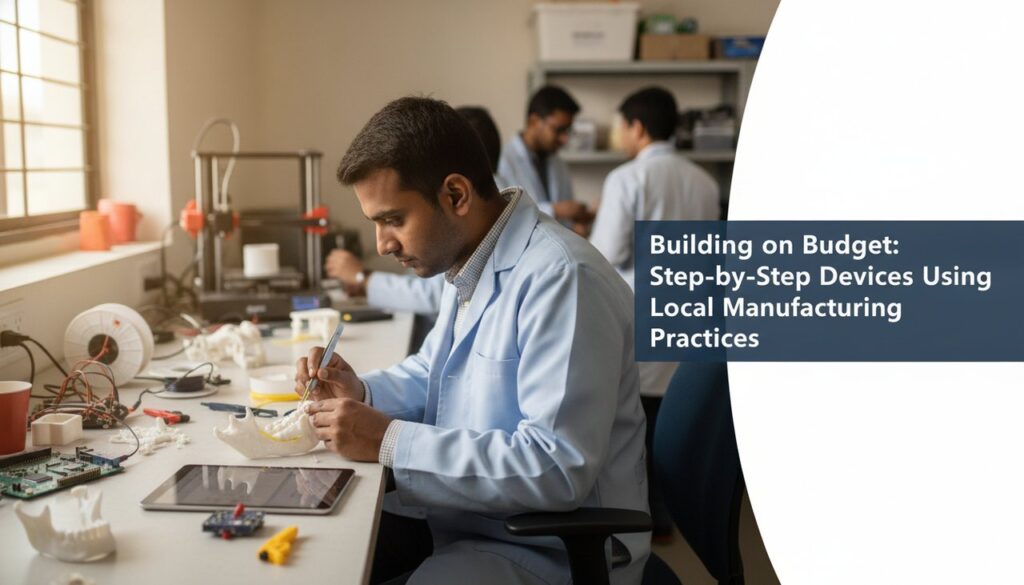
Building on Budget: Step-by-Step Devices Using Local Manufacturing Practices
In the bustling corridors of a government hospital in India, a young resident juggles between patients, each with unique needs but all demanding immediate attention. Yet, amid the daily chaos, a frequent thought crosses her mind: “What if there was a better tool for this?” The gap between recognizing a clinical need and creating a practical solution often feels insurmountable, especially when budget constraints loom large. But what if innovation didn’t have to break the bank?
The Myth of High-Cost Innovation
For many clinicians, the idea of developing a medical device is shackled by the myth that innovation requires vast resources, engineering expertise, and substantial funding. This belief stalls many promising ideas. Yet, the reality is different. With the right approach, it’s possible to build effective medical devices using local materials and manufacturing practices, aligning with the constraints and needs of Indian healthcare settings.
Building med-tech without a big budget is not just possible; it’s a necessity in resource-strapped environments.
Step 1: Identifying the Real Need
Every successful device begins with a keen understanding of the problem. Instead of assuming what the solution should be, spend time in the ward, observing and asking questions. What are the recurring issues? What tools are lacking? Involving other clinicians and even patients in this discovery phase can provide insights that a solitary perspective might miss.
Step 2: Embrace Local Materials
The next step is to think locally. India is rich in diverse materials that can be repurposed for medical innovation. For instance, polypropylene, widely used in packaging, can be molded into medical-grade items. Bamboo, a sustainable resource, has been used innovatively in splints and supports. By leveraging readily available materials, costs are kept low, and the need for importing expensive components is minimized.
Step 3: Collaborate with Local Manufacturers
Local manufacturing units, often overlooked, are a goldmine for healthcare innovators. These units, skilled in producing various goods, can adapt their processes to create medical devices. Engaging them not only supports the local economy but also tailors the production to meet specific requirements of the Indian healthcare context. Open dialogues with manufacturers can lead to creative solutions that might not be apparent in isolation.
Step 4: Rapid Prototyping with 3D Printing
3D printing technology has democratized innovation, making it accessible even in resource-constrained environments. By using 3D printers, prototypes can be developed quickly and adjusted as needed. This flexibility is crucial in refining designs without incurring prohibitive costs. The ability to iterate rapidly is a game-changer, allowing for swift transitions from concept to functional prototype.
Step 5: Testing and Iteration
Once a prototype is developed, real-world testing in the clinical environment is essential. Gather feedback from fellow clinicians, observe the device’s performance, and make necessary adjustments. This iterative process ensures that the final product is not only functional but also user-friendly and reliable under local operating conditions.
Step 6: Navigating Regulatory Pathways
In India, navigating the regulatory landscape is a critical step. Understanding the Central Drugs Standard Control Organization (CDSCO) guidelines and obtaining the necessary approvals can seem daunting but is manageable with careful planning. Engaging with regulatory experts early in the process can streamline this phase, ensuring compliance without unnecessary delays.
Step 7: Scaling and Sustainability
After a successful prototype and initial deployment, consider the scalability of your device. Can it be produced at a larger scale without compromising quality or dramatically increasing costs? Sustainability also involves planning for maintenance and support, ensuring that the device remains functional and beneficial over time.
Real-World Application: The Splint Success Story
Consider the story of a group of Indian medical students who identified a need for affordable splints in rural clinics. By using local bamboo and simple binding techniques, they created a cost-effective splint that was not only functional but also culturally acceptable. Their approach was rooted in understanding local needs and capabilities, proving that innovation doesn’t require an engineering degree or a hefty budget.
Breaking the Cost Barrier
Creating effective diagnostic devices for rural health centers often faces a cost barrier. However, by using local resources and manufacturing, it’s possible to break this barrier. This approach not only reduces costs but also ensures that the devices are contextually appropriate and readily maintainable.
Conclusion: Encouragement with Teeth
The journey from problem identification to device creation in a budget-constrained environment is challenging yet achievable. It requires a mindset shift from viewing constraints as barriers to seeing them as opportunities for innovation. By embracing local resources, engaging with manufacturers, and iterating with user feedback, clinicians can transform bedside problems into practical solutions. The road is not easy, but it’s navigable, and necessary for advancing healthcare in settings where every rupee counts.
The next time you encounter a clinical hurdle, remember: the tools to innovate might be closer than you think. You have the clinical expertise; now, it’s about applying it creatively and practically. Embrace the challenge, start small, and iterate. Innovation is within your grasp, no engineering degree required.
Further Reading
- The Real Cost of Innovation: Building Med-Tech Devices Without Breaking the Bank
- Empowering the Scrappy Innovator: Building Tools with Local Materials and Talent
- Breaking the Cost Barrier: Building Effective Diagnostic Devices for Rural Health Centers
- Building Med-Tech Without a Big Budget: Lessons from a Resource-Strapped Government Hospital