
The Real Cost of Innovation: Building Med-Tech Devices Without Breaking the Bank
In the realm of medical technology, innovation is often perceived as synonymous with high costs. This belief is especially prevalent when discussing the development of therapeutic complex medical devices, where the numbers can be staggering. According to a recent study, the mean capitalized cost of bringing a novel therapeutic complex medical device to the US market is estimated at a whopping $522 million. Yet, this figure obscures an important truth: the lion’s share of this cost is not in the regulatory hurdles but in the nonclinical development stage, accounting for a staggering 85% of the total expense. Herein lies a counter-intuitive truth: the most expensive part of the process is the one most ripe for cost-saving innovation.
Rethinking the Nonclinical Stage
The nonclinical stage, often seen as a black box of scientific and engineering mysteries, is where the real opportunity for cost reduction lies. This stage involves prototype development, bench testing, and initial safety assessments, consuming both time and financial resources. However, by leveraging available technologies and adopting a frugal innovation mindset, significant savings can be achieved. The key is to focus on practical, accessible methods that don’t compromise on safety or effectiveness.
The nonclinical stage accounts for 85% of the total development cost for a novel therapeutic complex medical device.
1. Embrace 3D Printing
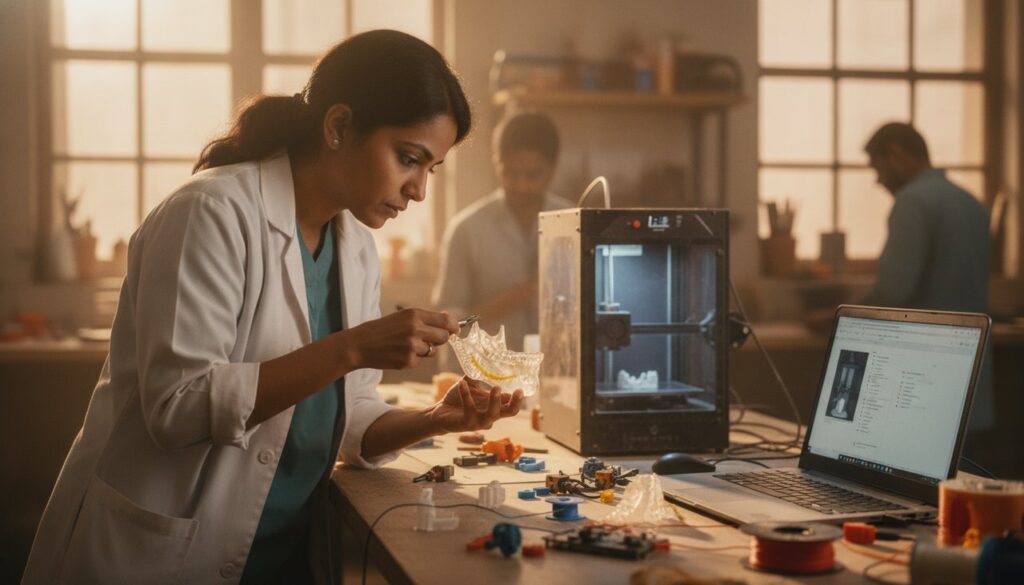
3D printing has revolutionized prototype development by reducing the need for expensive custom manufacturing processes. It allows for rapid iteration and testing, enabling developers to refine designs at a fraction of the traditional cost. Moreover, with a growing number of open-source designs and materials available, even small teams can produce functional prototypes without breaking the bank. This technology not only reduces material costs but also shortens the development timeline, a critical factor in capital-intensive projects.
2. Collaborate with Local Manufacturers
Local manufacturing partnerships can be a game-changer for med-tech developers. Indian medical innovators, for instance, can leverage local manufacturing capabilities to produce components at a lower cost compared to international suppliers. This approach not only cuts costs but also supports local economies and fosters a more agile response to design changes and supply chain disruptions. Building a network of local manufacturers ensures that developers can access the materials and expertise needed, without the added burden of international shipping and tariffs.
3. Optimize Resource Allocation
Resource allocation is crucial in managing development costs. By identifying the most critical components and processes that impact device functionality, developers can allocate resources more effectively. This means investing in high-quality materials and processes for critical components while seeking cost-effective alternatives for less critical parts. Prioritizing spending in this way ensures that the device meets regulatory standards without unnecessary expenditure.
The Role of Regulation: A Minor Cost but a Major Hurdle
While the FDA submission, review, and approval process constitutes only 0.5% of the total development cost, it remains a significant hurdle for developers. The complexity of navigating these regulatory waters can lead to delays that inflate costs indirectly. Understanding the regulatory landscape is essential for streamlining the approval process. This is where knowledge of the specific requirements and a proactive approach to compliance can make a big difference.
Engaging with regulatory experts early in the development process can help identify potential issues before they become costly problems. In India, understanding the CDSCO regulatory reality and leveraging local expertise can significantly reduce the time and cost associated with obtaining necessary approvals. Developers can learn from others who have successfully navigated these barriers, as captured in stories of success in Indian med-tech approvals here.
Innovate with a Frugal Mindset
Innovation does not inherently require a large budget. The myth that high costs are a necessary part of med-tech development is just that, a myth. By adopting a frugal mindset and leveraging local resources, developers can achieve remarkable results without massive financial outlay. This approach is not just about cutting costs; it’s about making smart, strategic decisions that maximize value.
1. Harness Open-Source Tools
Open-source software and hardware platforms offer a wealth of resources for medical device developers. These tools provide access to a community of innovators who share designs, code, and best practices, enabling developers to build on existing work rather than starting from scratch. This collaborative approach accelerates development timelines and reduces costs associated with proprietary solutions.
2. Focus on Incremental Innovation
Not all innovation needs to be groundbreaking. Incremental improvements to existing devices can have a significant impact on patient outcomes and device performance. By focusing on small, manageable changes, developers can bring new products to market more quickly and with less risk. This approach allows for continuous improvement and adaptation, ensuring that devices remain relevant and effective in a rapidly changing healthcare landscape.
Conclusion: The Path Forward
The true cost of innovation in med-tech is not merely financial; it’s about the strategic allocation of resources and the intelligent application of technology. By rethinking the nonclinical stage, engaging proactively with regulatory processes, and adopting a frugal innovation mindset, developers can bring novel therapeutic complex medical devices to market without breaking the bank. The key is to challenge the status quo and embrace a new way of thinking about innovation, one that prioritizes value over expense and creativity over convention.
Ultimately, the path to affordable med-tech innovation lies in leveraging the resources and knowledge available, focusing on practical solutions, and fostering a collaborative environment where ideas can thrive. By doing so, we can transform the landscape of medical technology and make life-saving devices accessible to those who need them most.