
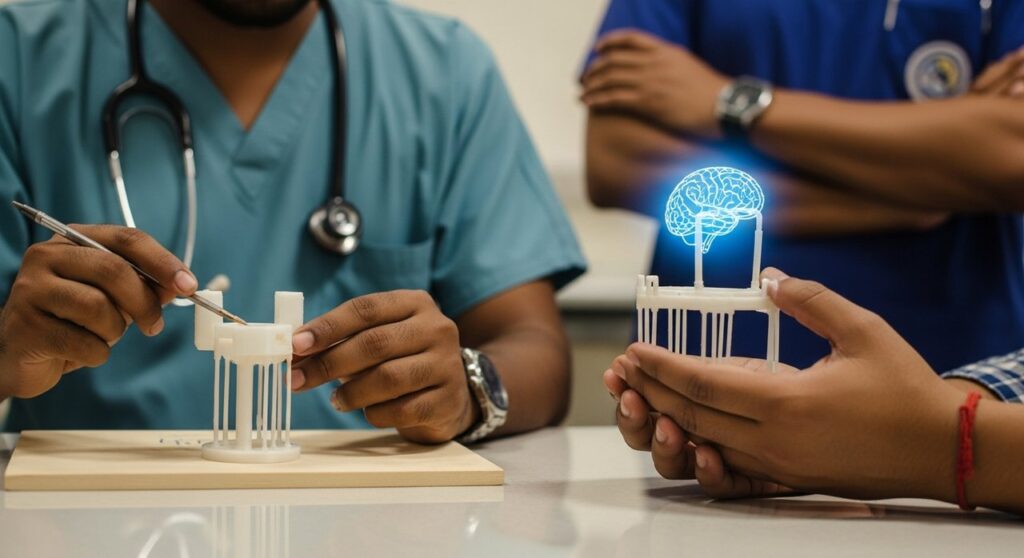
Creating Patient-Powered Tools: Harnessing Feedback for Low-Budget Device Innovation
In a dimly lit ward of a bustling Mumbai hospital, a resident doctor frowns at the outdated piece of equipment in his hands. It’s a splint, crudely fashioned, ill-fitting, and uncomfortable for the patient. The patient winces with every movement, and the doctor knows there’s a better way. But the constraints, budget, resources, time, seem insurmountable. This scene isn’t unique. Across India, clinicians encounter daily roadblocks that hinder patient care and compromise outcomes. Yet, hidden within these challenges lies an untapped resource: the very patients they serve.
The Unseen Potential of Patient Feedback
Patient feedback is often overlooked in the design process of medical devices. While clinicians are aware of the technical aspects of a device, the patient experience is frequently lost in translation. A study in Sweden found that involving patients in the design process increased the usability and acceptance of medical devices by up to 30%. In India, this participatory design approach remains underutilized. Yet, it holds the key to creating affordable and effective medical solutions tailored to the real-world needs of both patients and healthcare providers.
Patient insights are not a luxury; they are a necessity for meaningful innovation.
Consider the example of a low-cost prosthetic limb designed with input from users. Initial prototypes failed to consider the nuances of daily life in a rural Indian setting, walking on uneven terrain, the need for durability, and cultural considerations of appearance. It was only through iterative feedback and testing with actual users that a functional, culturally appropriate, and cost-effective design emerged.
Steps to Harness Patient Feedback in Device Innovation
- Start Small and Simple: The most significant barrier is often getting started. Begin with informal feedback sessions with patients and clinicians. Ask open-ended questions about existing devices: “What works? What doesn’t? What would you change?” This stage is about gathering unfiltered insights without the pressure of immediate solutions.
- Create Low-Fidelity Prototypes: Use readily available materials to create simple prototypes. Cardboard, clay, or even paper can be used to model ideas. These prototypes are not about perfection but about sparking conversations and further feedback.
- Iterate and Test: Bring prototypes back to the ward. Allow patients and clinicians to interact with them. Observe, ask questions, and be ready to make changes. This iterative process is where true innovation happens.
- Build a Feedback Loop: Establish ongoing communication channels with patients. Encourage continuous feedback and make it easy for patients to share their experiences. This can be as simple as a suggestion box or as complex as a digital app for feedback.
- Document and Share Learnings: Share successes and failures with the broader medical community. Platforms like How a Simple Patient Feedback Loop Sparked a Revolutionary Device Design provide valuable insights and inspire others to adopt similar practices.
Breaking Down the Myth of High Costs
One common misconception is that innovation requires substantial financial investment. This myth can deter many clinicians from pursuing new ideas. However, the reality is that creativity often thrives under constraints. The story of a 3D-printed stethoscope developed in Gaza, costing less than $3, illustrates this point. By leveraging local materials and patient insights, the developers created a tool that met international standards at a fraction of the cost.
In India, organizations like MICE Labs are pioneering this approach. By focusing on low-cost, high-impact innovations, they demonstrate that significant advancements are possible even with limited resources. Their work with 3D printing and accessible design tools is transforming how medical devices are created and refined.
For Indian clinicians, the path from idea to implementation is more accessible than ever. With resources like Ward-Driven Insights: Turning Patient Feedback into Usable 3D-Printed Tools, the knowledge and support to innovate are within reach.
Challenges and Realities
Of course, challenges remain. Regulatory hurdles can slow down the innovation process, and navigating the CDSCO’s requirements for medical devices requires diligence. Additionally, ensuring sterility and safety in low-resource settings is non-negotiable. These realities should not be glossed over but addressed head-on. By understanding the regulatory landscape and working with local manufacturers, clinicians can overcome these barriers.
Innovation in medicine is not just about creating new devices; it’s about improving lives within the constraints we face.
The Encouragement Clinicians Need
The road to creating patient-powered tools is not an easy one, but it is achievable. Clinicians who engage with patients and embrace a mindset of continuous improvement will find that the rewards far outweigh the challenges. The key is to start small, iterate often, and remain open to feedback. By doing so, you are not just changing the design of a device but transforming the experience of care for patients.
In the end, the true measure of success is not the device itself but the impact it has on the lives it touches. For Indian clinicians ready to take the plunge into innovation, remember this: the most powerful tool at your disposal is your willingness to listen and learn from those who stand to benefit the most, your patients.