
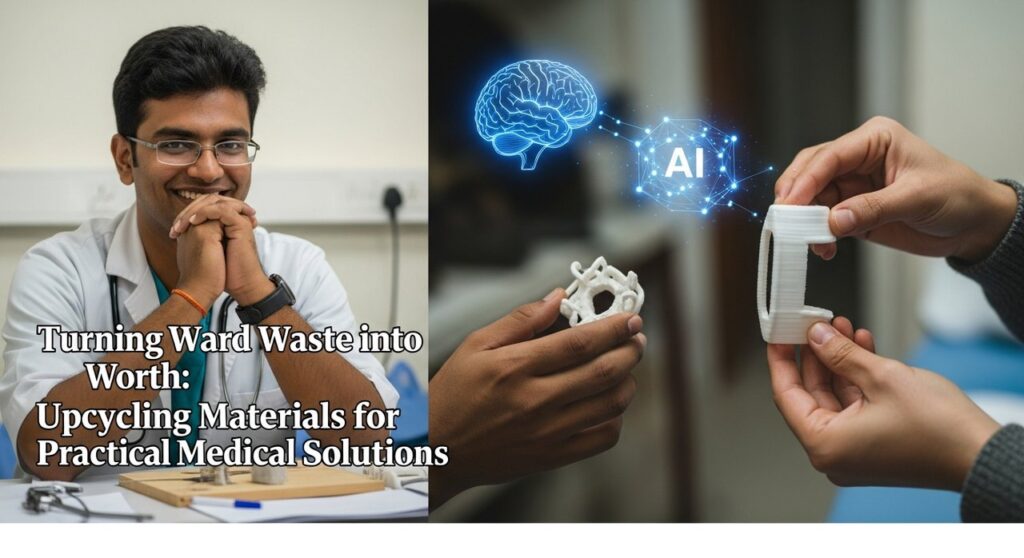
Turning Ward Waste into Worth: Upcycling Materials for Practical Medical Solutions
Imagine standing in a bustling hospital ward, where disposable plastics and single-use materials pile up faster than the patients can be treated. For most, this waste is an unavoidable byproduct of modern healthcare. But what if it wasn’t? What if these discarded materials could be transformed into valuable resources, saving money, reducing waste, and even improving patient care? This isn’t a distant dream, it’s a burgeoning reality driven by the principles of upcycling.
In the healthcare setting, the term ‘upcycling’ takes on a new significance. Unlike traditional recycling, which often degrades material quality, upcycling retains or enhances the value of the materials it processes. This is not just an environmental imperative but a practical solution to the ever-growing problem of medical waste. Upcycling can convert what was once seen as waste into resources, creating opportunities for innovation and sustainability in a field that desperately needs both.
The Hidden Cost of Medical Waste
Medical waste is a massive, often invisible cost to healthcare systems. In India alone, hospitals generate approximately 1.5 kilograms of waste per bed per day, much of which ends up in landfills or incinerators. This is not only environmentally unsustainable but also economically inefficient. The cost of waste disposal is significant, and the environmental impact of incineration contributes to air pollution and greenhouse gas emissions.
Every kilogram of medical waste that is upcycled instead of incinerated saves approximately 3 kilograms of carbon dioxide emissions.
What if instead of burning these materials, we could upcycle them into something of greater value? Advanced recycling technologies are already making this possible. By converting plastics into new, high-value products, healthcare facilities can reduce their environmental footprint and cut costs.
Upcycling in Action: Real-World Examples
One of the most promising examples of upcycling in the medical field is the conversion of used surgical instruments and single-use plastics into new products. In some innovative programs, materials like polypropylene from used syringes and IV bags are being remanufactured into medical-grade products such as bedpans and surgical trays. This not only reduces waste but also provides hospitals with a steady supply of necessary items at a fraction of the cost.
Another success story comes from MICE Labs, where discarded materials are transformed into functional medical devices. By utilizing 3D printing and local manufacturing, MICE Labs turns what would be waste into customized, durable medical solutions. This approach not only mitigates waste but also addresses specific clinical needs that are often unmet by mass-produced equipment.
The Role of Advanced Recycling Technologies
Advanced recycling technologies play a crucial role in upcycling healthcare waste. These technologies break down plastics into their original building blocks, allowing them to be remade into products of equal or greater value. This process is more efficient and environmentally friendly than traditional recycling, which often downgrades materials.
For example, the use of pyrolysis, a process that converts plastics into synthetic crude oil, has shown promise in creating a circular economy for healthcare plastics. This not only reduces reliance on virgin materials but also provides an economic incentive for waste collection and processing. In turn, this drives investment in recycling infrastructure and creates jobs, further amplifying the benefits of upcycling.
Challenges and Considerations
Despite its potential, upcycling in healthcare is not without challenges. The sterility of recycled materials is a primary concern, as is the regulatory landscape that governs medical supplies. To address these issues, rigorous testing and certification processes must be in place to ensure that upcycled products meet health and safety standards.
Additionally, the initial investment in upcycling technology and infrastructure can be a barrier for many facilities. However, the long-term savings and environmental benefits often outweigh these initial costs. Collaborative efforts between government, industry, and healthcare providers are essential to overcome these hurdles and make upcycling a viable solution across the healthcare sector.
The Path Forward: A Call to Action
Upcycling medical waste is not just an environmental necessity but a strategic opportunity for the healthcare industry. By transforming waste into worth, hospitals can reduce costs, improve sustainability, and even enhance patient care. This approach challenges the traditional view of waste as a problem, reframing it as a resource ripe for innovation.
For healthcare practitioners, the path forward is clear: embrace upcycling as a core component of waste management strategies. This requires not only technological investment but also a cultural shift towards sustainability and resourcefulness. By doing so, healthcare facilities can lead the way in creating a cleaner, more efficient, and more responsible industry.
The future of healthcare lies in seeing waste not as a burden but as a potential source of value and innovation.
So, the next time you stand in a ward surrounded by discarded materials, ask yourself: What can I create from this? The answer may surprise you, and it just might change the way we think about waste in healthcare forever.