
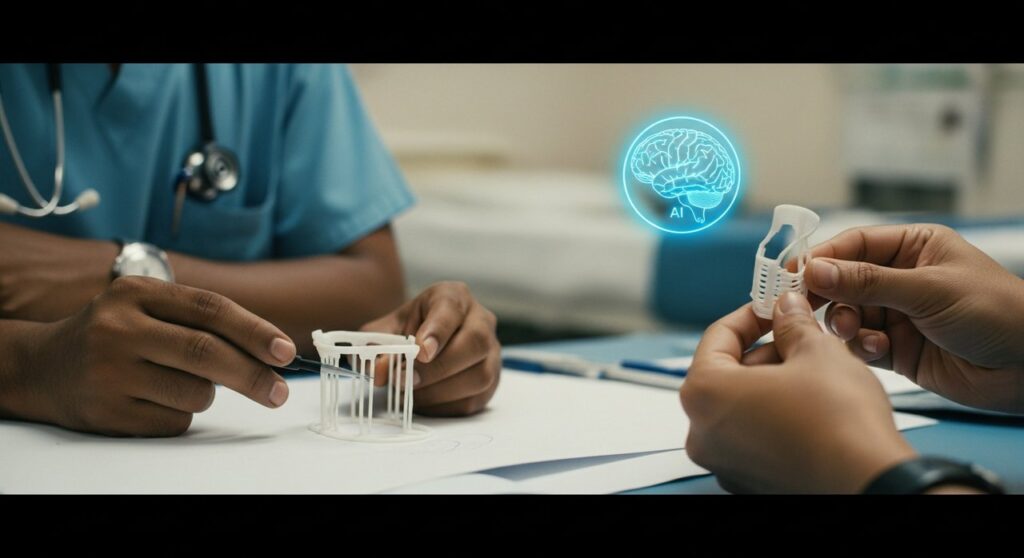
Sketching Solutions: From Bedside Realities to First Prototypes
The ward was in chaos. A patient needed immediate intervention, and the available equipment proved insufficient. Dr. Mehta looked around, frustrated by the inefficiencies that were glaringly evident in that moment of urgency. He thought, “Surely, there must be a better way to do this.” That was the spark. It wasn’t the first time Dr. Mehta had felt this way, nor would it be the last for countless clinicians across India. But what if that frustration could be transformed into innovation?
The journey from bedside realities to functional prototypes is not just a linear progression of creativity and engineering; it’s an acknowledgment of the gaps in our current medical landscape and a resolve to fill them. It’s about recognizing that the problems you see daily in a hospital can be the seeds of innovative solutions, and sketching is your first tool in this transformative process.
The Power of Pen and Paper
Sketching is not the domain of artists alone. For medical innovators, sketching is a bridge between a problem observed and a solution imagined. It allows you to visualize issues, ideas, and processes before committing significant resources to development. By bringing concepts to life on paper, you can explore a myriad of solutions without the fear of costly mistakes.
Why isn’t sketching more commonplace in clinical innovation? Perhaps it’s the vulnerability of exposing half-formed ideas or the misconception that medical innovation requires sophisticated technology from the get-go. However, sketching shows your process and the iterative development of your solution. It’s a journey that involves eliminating impractical ideas quickly, engaging others through visual stimuli, and keeping the entire team on the same page.
“A problem visualized is a problem halved.”
From Sketch to Prototype: A Practical Guide
-
Identify the Clinical Problem
Start with what you know best, the clinical problem. What inefficiencies or shortcomings do you encounter? Is there a device you wish you had, or a process that could be streamlined? Clearly define the issue on paper, keeping it simple and focused. This clarity will guide your entire prototyping journey.
-
Sketch Your Ideas
Once you have your problem defined, begin sketching potential solutions. Don’t worry about artistic skill, focus on functionality and flow. Use simple shapes and symbols to represent different components or stages of your solution. This is where your imagination can run free without the constraints of reality.
-
Collaborate and Refine
Share your sketches with colleagues and invite feedback. Does your idea solve the problem? What improvements can be made? Use this feedback to refine your sketches. This collaborative process not only enhances your solution but also builds a sense of ownership and collective effort among your team.
-
Create a Physical Model
With a refined sketch in hand, begin creating a physical prototype. This could be a simple 3D-printed model or a more intricate mock-up, depending on the complexity of your solution. Focus on key components first, ensuring they address the core problem effectively.
-
Test and Iterate
Test your prototype in a controlled environment. Gather data on its functionality, usability, and effectiveness. Use this data to make necessary adjustments, continually refining your solution until it meets clinical needs. This iterative process is crucial for developing a reliable and effective medical device.
Confronting the Challenges
Prototyping in a medical setting isn’t without its challenges. Issues such as sterility, liability, and regulatory approval can seem daunting. However, these are not insurmountable obstacles. Understanding how to navigate the CDSCO maze with minimal hassle is a vital skill. Moreover, embracing resource constraints as opportunities can lead to innovative, cost-effective solutions.
“Innovation does not require an engineering degree, a grant, or permission. It requires the courage to start with what you have.”
Real-World Impact: A Case Study
Consider the journey of a simple splint design that emerged from ward frustration. A clinician observed that the existing splints were cumbersome, leading to patient discomfort and extended recovery times. Armed with just a pencil and paper, he sketched a new design that was lightweight and adjustable, tailoring to individual patient needs. This sketch was shared with colleagues, refined, and eventually transformed into a 3D-printed prototype. The result? A practical, low-cost solution that improved patient outcomes and could be easily replicated in other hospitals.
The lesson here is clear: the pathway from bedside problem to innovative solution begins with a sketch. It’s about understanding the real costs of maintaining the status quo and daring to take the first step towards change. By engaging in this process, you not only innovate but also inspire others to see the potential for improvement in everyday clinical challenges.
The Road Ahead
As you consider the challenges you face daily, ask yourself: what can be sketched, what can be improved, and what can be created? Your experience in the clinical field is invaluable, and with the right tools, you can transform that knowledge into tangible solutions. Sketching is more than just a tool; it’s the beginning of a journey that can lead to significant advancements in medical care.
So, pick up that pen, embrace the discomfort of the unknown, and start sketching the future of healthcare today.