
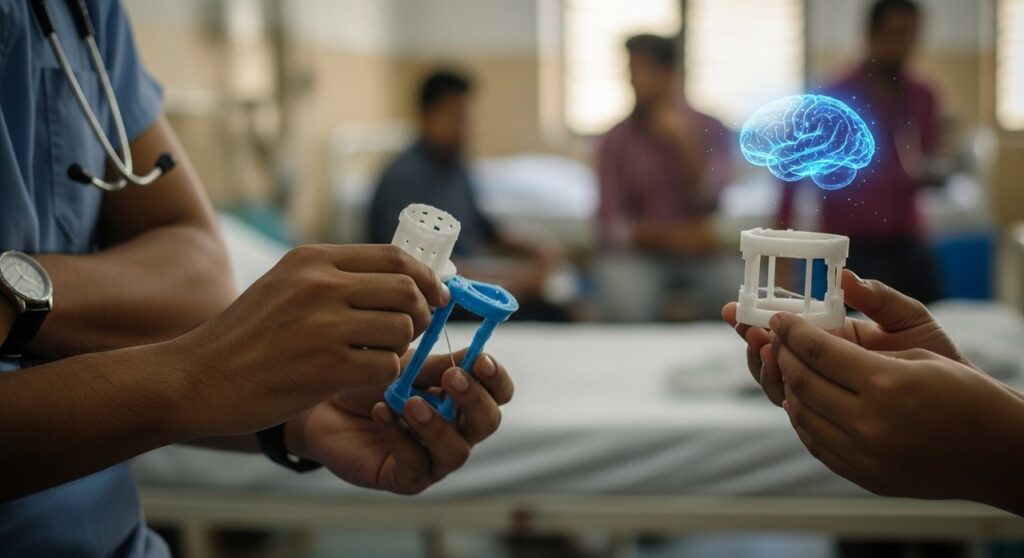
Prototyping in Pediatrics: Building Child-Friendly Solutions with Limited Resources
Picture this: A bustling pediatric ward in a government hospital where the cries of anxious children mix with the hurried footsteps of overworked nurses. The air is thick with the distinct smell of antiseptic, and parents look helplessly as their children wrestle with fear and discomfort. This is the reality for many Indian hospitals today, where child-friendly environments are the exception rather than the norm.
Pediatric care in India faces a unique set of challenges, primarily due to the resource constraints that plague public healthcare facilities. The scarcity of child-friendly medical devices exacerbates the anxiety and fear children experience during hospital visits. But what if the solution to this problem doesn’t require a massive budget or an engineering degree? What if you could start building child-friendly solutions right now, with the resources available at your fingertips?
The Myth of the Engineering Degree
One prevailing myth in the field of medical innovation is that you need an engineering degree or substantial funding to create impactful solutions. This is far from the truth. At MICE Labs, we’ve seen countless examples of clinician-driven innovations that started with nothing more than a simple idea and a commitment to improving patient care.
Prototyping is not about perfection; it’s about problem-solving with the resources at hand.
Take, for instance, the story of a pediatrician who noticed that the standard nebulizer mask was intimidating for children. Instead of waiting for a commercial solution, she used a low-cost 3D printer to create a mask in the shape of a friendly animal. The result? A significant reduction in anxiety among her young patients and quicker treatment times.
Prototyping: The Scrappy Path Forward
Your journey from problem to prototype can start today. Here’s how:
1. Identify the Problem
Start by pinpointing a specific issue that affects your pediatric patients. Is it the intimidating appearance of medical equipment? The lack of engaging distractions during long waits? Or perhaps it’s the difficulty in communicating complex medical procedures to children? Once you identify the problem, you can begin brainstorming potential solutions.
2. Use What You Have
You don’t need state-of-the-art facilities to create a prototype. Simple materials like cardboard, foam, or even clay can be used to build low-fidelity models. The key is to create a tangible representation of your idea that you can test and refine.
Consider using prototyping techniques that involve materials readily available in your hospital. This approach not only keeps costs low but also allows for rapid iteration and feedback.
3. Engage Stakeholders
Involve your colleagues, nurses, and even patients’ families in the prototyping process. Their insights and feedback can be invaluable in refining your prototype and ensuring it meets the needs of the end-user. Collaboration also fosters a sense of ownership and commitment to the project.
4. Test and Iterate
Once you have a prototype, test it in real-world scenarios. Observe how children interact with it and gather feedback from both the children and their parents. Be prepared to make adjustments and iterate on your design until it effectively addresses the problem.
It’s essential to embrace failure as a stepping stone to innovation. Each iteration brings you closer to a solution that works.
Real-World Constraints and Solutions
Working within the constraints of a government hospital can be challenging, but it’s also an opportunity to innovate. Consider these strategies:
- Local Manufacturing: Partner with local manufacturers who can produce small batches of your prototype at a lower cost. This not only supports local businesses but also ensures your designs are tailored to the specific needs of the Indian healthcare context.
- Regulatory Navigation: Understanding the CDSCO regulatory framework is crucial. Familiarize yourself with the necessary approvals for medical devices, and seek guidance from experienced colleagues or resources available through MICE Labs.
- Patient Affordability: Design with affordability in mind. The goal is to create solutions that are both effective and accessible to all patients, regardless of their financial situation.
For more tips on navigating these challenges, check out our guide on safe device prototyping.
The Future of Child-Friendly Healthcare
The path to creating child-friendly healthcare environments doesn’t have to be paved with costly investments and complex engineering. By leveraging available resources and focusing on user-centric design, clinicians can drive meaningful change in pediatric care.
As you embark on this journey, remember that the goal is not to create the perfect solution overnight but to make incremental improvements that enhance the experiences of young patients. In doing so, you’ll not only improve treatment outcomes but also contribute to the long-term well-being of children across India.
Ultimately, the power to transform pediatric care lies in your hands. So, start prototyping, get creative, and make a lasting impact on the lives of the children you serve. After all, innovation isn’t about having all the answers, it’s about having the courage to ask the right questions.