
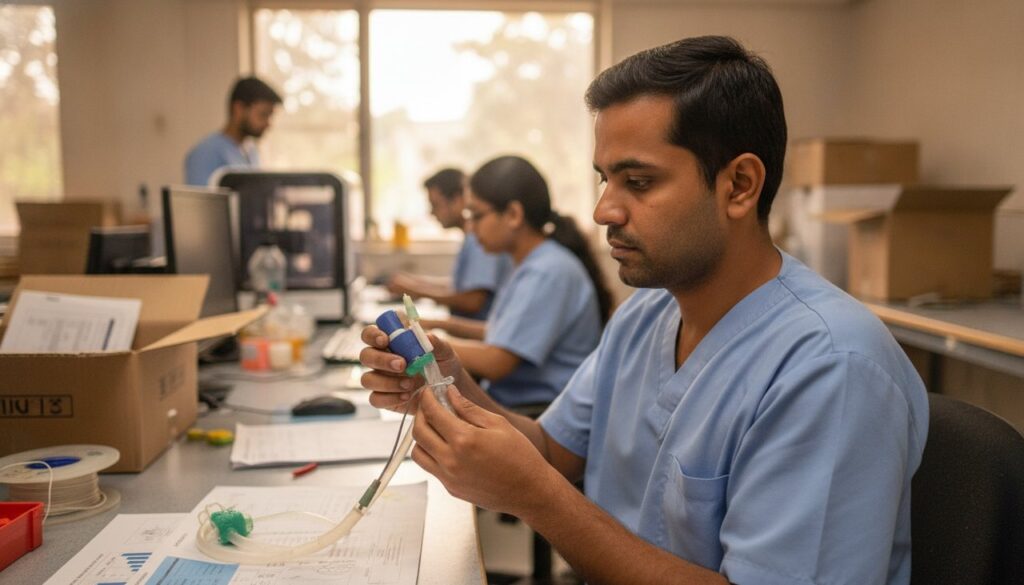
From Patient Need to Prototype: Building Solutions You Can Test This Week
As you rush through the corridors of a bustling government hospital in Mumbai, a patient’s need catches your eye. The ward is crowded, the equipment outdated, and the frustration palpable. You know there’s a better way, but where do you start? The answer lies in prototyping, the scrappy, hands-on path from a nagging clinical problem to a tangible solution, all within a week. You don’t need an engineering degree or a hefty grant. What you need is the courage to innovate with the resources at hand.
The Unspoken Truth: Your Clinical Environment Is Your Best Lab
For many Indian clinicians, the wards are a constant reminder of inefficiencies and unmet needs. Yet, these very spaces are your best allies in innovation. Imagine turning a corner and seeing not just a flurry of activity but a living lab, ripe with possibilities for improvement. The challenge lies in recognizing this potential and acting on it.
Take, for instance, the common problem of inefficient ward navigation. You’ve seen it: patients and staff wandering, looking lost, wasting precious time. Now, consider creating a low-cost patient tracker. Using simple, locally available materials, think RFID tags or smartphone-based solutions, you can develop a prototype to streamline movement and improve care efficiency. This approach not only addresses a real problem but also empowers you to build your own low-cost patient tracker.
The most transformative innovations often emerge from the constraints of our environment, not despite them.
Step 1: Identify and Define the Problem
Start with precision. What exactly is the problem that needs solving? It could be the cumbersome process of sterilizing equipment in resource-poor settings. By pinpointing the core issue, you set the stage for a focused prototyping effort. Dive deep into the daily challenges, observe workflows, and gather insights directly from the frontline staff who grapple with these issues daily.
The key is specificity. For instance, if sterility is a concern, your prototype could involve creating safe device prototyping solutions tailored to local conditions, as explored in our discussion on real-world solutions for safe device prototyping.
Step 2: Embrace Rapid Prototyping
Rapid prototyping isn’t just for tech giants or academic labs. It’s for you, right now. Imagine cardboard and basic electronic components as your tools. They allow you to build and test functional models without the need for specialized equipment. This is your chance to simulate, iterate, and refine, all at minimal cost.
Consider the approach taken by Presbyterian Healthcare Services in New Mexico. They constructed mock-up rooms using simple materials like heavy cardboard to test room layouts and functionalities. The cost? Less than ₹700,000 for seven room types. This exercise saved them from costly post-construction changes and enhanced caregiver satisfaction. You can adopt similar methods to test your prototypes in real-world settings, adjusting based on feedback from users.
Step 3: Gather Feedback and Iterate
Feedback is the lifeblood of innovation. As you test your prototype, gather input from the very people who will use it, clinicians, patients, and support staff. Their insights will reveal unforeseen issues and opportunities for improvement. Be ready to iterate, refine, and test again. This cycle of feedback and iteration is what transforms a basic model into a robust, viable solution.
Remember, the goal is not to create a perfect product on the first try. Instead, aim for a functional prototype that can evolve. This mindset not only saves time and resources but also fosters a culture of continuous improvement.
Step 4: Navigate Regulatory Realities
In India, navigating the regulatory landscape is crucial. The Central Drugs Standard Control Organization (CDSCO) sets the standards for medical devices. While this might seem daunting, it’s essential to engage with these regulations early in the prototyping process. Understanding the requirements will guide you in making compliant design decisions and avoid potential roadblocks.
For a practical approach, consider collaborating with local regulatory experts or institutions that can provide guidance on compliance. This collaboration can streamline the approval process and ensure that your innovation meets the necessary standards.
Step 5: Leverage Local Manufacturing
Local manufacturing is not just a cost-saving measure; it’s a strategic advantage. By partnering with local manufacturers, you can shorten lead times, reduce costs, and facilitate rapid iterations. Moreover, it provides an opportunity to support local economies and build relationships with partners who understand the unique challenges of the Indian healthcare sector.
Evaluate potential manufacturers based on their ability to produce at scale and their familiarity with medical-grade materials. This will not only ensure quality but also prepare you for scaling your solution beyond the prototype stage.
Step 6: Test and Validate
Testing is where your prototype meets reality. Conduct rigorous trials to validate its functionality, safety, and user acceptance. This phase is crucial for identifying any last-minute adjustments before full-scale production or implementation. Consider involving a diverse group of testers to cover various use cases and scenarios.
Incorporate both qualitative and quantitative metrics in your testing strategy. This could involve measuring user satisfaction, time saved, or error reduction rates. The data gathered here will be invaluable for making informed decisions about your prototype’s future.
True innovation is not just about creating a product; it’s about solving the right problem in the right way.
Conclusion: The Path Forward
Prototyping is not a linear path but a journey of discovery and adaptation. It’s about turning the everyday challenges of clinical practice into opportunities for improvement. As a clinician, you are uniquely positioned to drive meaningful change within the healthcare system. By embracing rapid prototyping, you can transform patient care and contribute to a culture of innovation.
So, the next time you spot a problem in your ward, remember that you have the tools and the ability to create a solution. It’s time to move from patient need to prototype, and make a real impact, one innovation at a time.
For further inspiration and practical guides, explore our resources on innovating under constraints and designing patient-centric devices. Let’s continue this journey together, transforming the landscape of Indian healthcare from the ground up.