
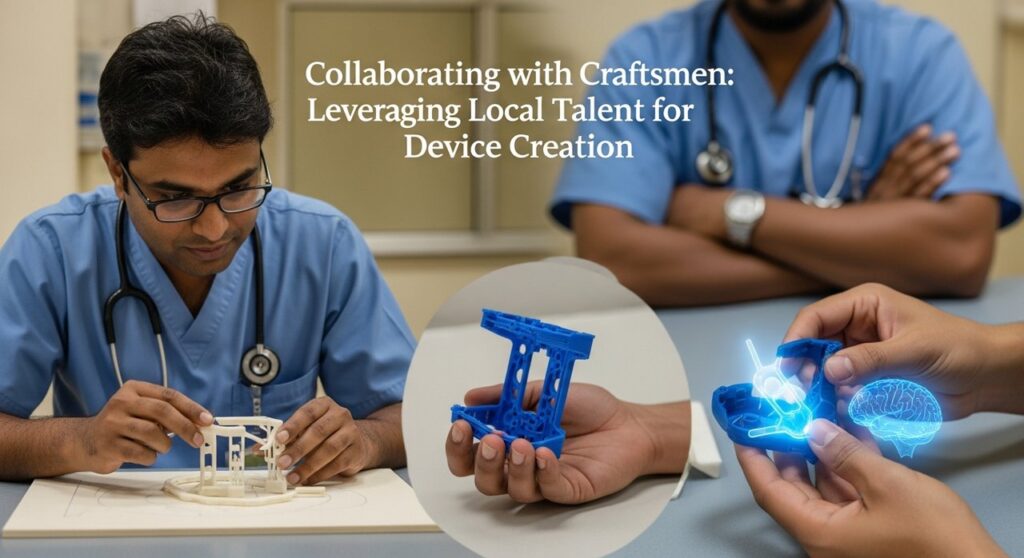
Collaborating with Craftsmen: Leveraging Local Talent for Device Creation
In the bustling wards of an Indian hospital, a junior doctor spots a recurring problem: the cumbersome process of securing IV lines with standard medical tape. It’s a scene all too familiar in the chaotic environment of healthcare, where time is precious and resources often scarce. Yet, the solution may lie in an unexpected place, the hands of local craftsmen and artisans, whose skills can bridge the gap between clinical needs and practical device creation.
The Overlooked Potential of Local Craftsmen
For many clinicians, the idea of collaborating with local artisans might seem unconventional. After all, medical devices are usually associated with high-tech labs and advanced engineering. However, this perspective overlooks the rich skill set and innovative potential that local craftsmen bring to the table. These artisans, with their deep understanding of materials and traditional craftsmanship techniques, can offer fresh insights and novel approaches to solving clinical challenges.
Consider the case of leveraging local materials and talent for innovation. When medical students and clinicians collaborate with craftsmen, they can create devices that are not only functional but also tailored to the specific needs of their environment. This approach aligns with the principle of ‘frugal innovation,’ which emphasizes affordability and accessibility without compromising on quality.
Why Collaborations Succeed: A First-Principles Teardown
At the heart of successful collaborations between clinicians and craftsmen is a fundamental understanding of why and how these partnerships work. There are several key factors that contribute to their success:
- Material Mastery: Craftsmen possess a profound knowledge of local materials, from bamboo to metals, which can be pivotal in designing medical devices that are sustainable and cost-effective. Their expertise can guide the selection of materials that are durable, easy to clean, and suitable for medical use.
- Design Flexibility: Unlike mass-produced devices, handcrafted solutions allow for greater customization and adaptability. This flexibility is crucial in healthcare, where needs can vary significantly from one setting to another. Collaborating with craftsmen enables the creation of bespoke devices that address specific clinical challenges.
- Iterative Prototyping: Craftsmen are adept at rapid prototyping, a skill that is invaluable in the iterative design process. By working closely with clinicians, they can quickly produce and refine prototypes, incorporating feedback to improve usability and functionality.
- Cultural Context: Local artisans understand the cultural and practical nuances of their communities. This insight can lead to the development of devices that are culturally appropriate and more likely to be accepted and used by healthcare providers and patients.
“The fusion of traditional craftsmanship with modern medical needs can lead to innovative solutions that are both practical and culturally relevant.”
Real-World Applications: Case Studies of Success
To illustrate the potential of such collaborations, let’s explore a few real-world examples where local craftsmen have played a pivotal role in medical innovation:
- 3D-Printed Orthopedic Splints: In a pilot project, local craftsmen worked alongside clinicians to develop customized orthopedic splints using 3D printing technology. By leveraging their skills in material manipulation and design, the craftsmen helped create splints that were tailored to individual patients’ needs, improving comfort and healing outcomes.
- Handcrafted Surgical Instruments: Artisans skilled in metalwork collaborated with surgeons to design and produce surgical instruments that were not only functional but also ergonomic. This collaboration resulted in tools that enhanced surgical precision and reduced fatigue for the surgeons.
- Patient Monitoring Devices: Craftsmen with expertise in electronics and woodworking teamed up with medical students to develop low-cost patient monitoring devices. These devices, crafted from locally available materials, provided essential health data in rural clinics where traditional monitoring equipment was unavailable.
Navigating Challenges: Constraints and Solutions
While the potential benefits of collaborating with local craftsmen are significant, the process is not without its challenges. Understanding and addressing these constraints is crucial for successful outcomes:
- Regulatory Hurdles: Medical devices must meet stringent regulatory standards to ensure safety and efficacy. Collaborating with craftsmen requires a clear understanding of these regulations and a commitment to compliance. This may involve working with regulatory experts to guide the design and testing processes.
- Resource Constraints: Limited access to advanced materials and tools can be a barrier to innovation. However, this challenge can also be an opportunity to explore alternative materials and techniques that are locally available and sustainable, aligning with the principles of frugal innovation.
- Communication Gaps: Effective collaboration requires clear communication and mutual understanding between clinicians and craftsmen. Bridging this gap may involve regular meetings, workshops, and collaborative design sessions to ensure that both parties are aligned in their goals and expectations.
The Path Forward: Embracing Local Talent
As the healthcare landscape continues to evolve, the need for innovative and locally relevant solutions becomes increasingly urgent. By embracing the potential of local craftsmen, clinicians can tap into a wellspring of creativity and expertise that can drive meaningful change in medical device development.
At MICE Labs, we are committed to fostering these collaborations by providing platforms and opportunities for clinicians and craftsmen to come together. Through initiatives like the MEDHA Hackathon, we aim to inspire the next generation of medical innovators to embrace the power of local talent and transform bedside problems into practical solutions.
A Provocation: Redefining the Innovator’s Role
In the end, the true value of collaborating with local craftsmen lies not just in the devices created, but in the shift in mindset it inspires. It challenges the traditional notion of who gets to innovate in healthcare, opening the door for a diverse range of voices and skills to contribute to the field.
So, the question remains: Will you be the clinician who takes the leap and collaborates with local craftsmen? The potential to redefine healthcare innovation is within reach, and it starts with a simple step, reaching out and building bridges with the talented artisans in your community.